
This blog was medically reviewed by Anne Bendel, MD, pediatric neurooncologist at Children’s Minnesota.
It can be frightening to hear that a child has cancer. And when a child is diagnosed with diffuse intrinsic pontine glioma (DIPG), which is a type of aggressive brain cancer, parents are understandably concerned and scared. We understand those feelings and are here to help walk you through what DIPG is and more.
DIPG cancer is a tumor that grows in the brainstem and typically affects young children. Cancers of the central nervous system (i.e. brain and spine) are the second most common type of childhood cancer, after leukemia. Below, we will help explain more about DIPG, the symptoms, how it’s diagnosed and the treatment options.
What is DIPG?
Diffuse intrinsic pontine glioma, also known as DIPG, is a type of brainstem glioma. A brainstem glioma is a type of central nervous system tumor. In children, DIPG make up approximately 10-20% of all central nervous system tumors. They typically occur in children under the age of 10.
Gliomas are a cancer of glial cells, which are the support cells of the brain. Diffuse intrinsic pontine glioma (DIPG) grow in a “diffuse” fashion among the normal cells within (i.e. “intrinsic” to) the “pons” (i.e. the middle region of the brainstem), making it impossible to remove the tumor without injuring the normal brainstem. They have an aggressive pathology (high grade) and unfortunately, have a dismal prognosis.
So, what is DIPG cancer? Diffuse intrinsic pontine gliomas happen when a glioma develops in the pons. Pontine gliomas are the most common brainstem gliomas, and also the most difficult to treat. Of note, DIPG are also called diffuse midline glioma (DMG or DMG cancer) that have originated from the pons.
Where is DIPG found?
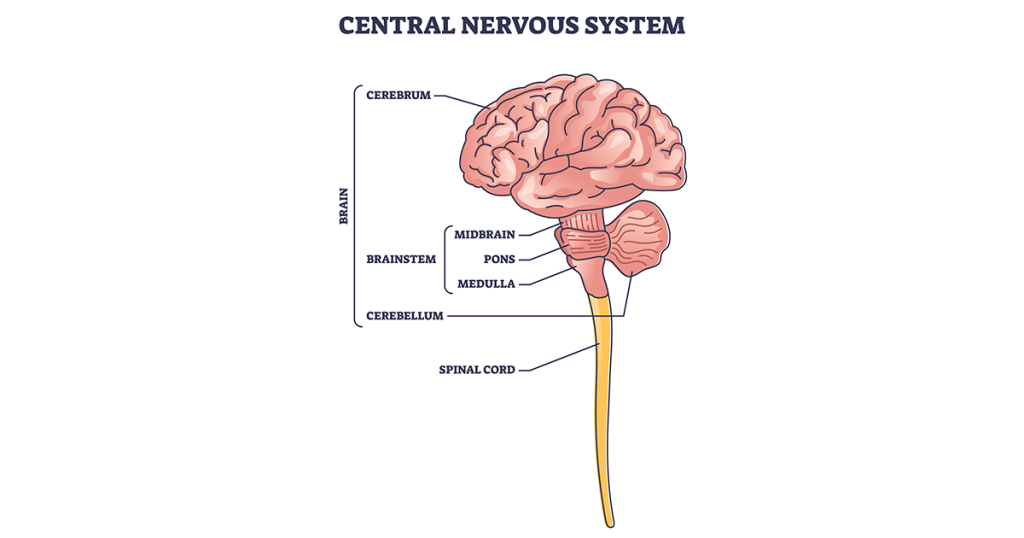
The brain stem, located deep in the back of the brain, is made up of the midbrain, pons and medulla. DIPG is found in the pons, which is the middle part of the brainstem. These parts of the brain control the body’s autonomic nervous system, which is responsible for controlling body processes like breathing, digesting, sweating and shivering. The pons also contains nerves that control facial movement, eye movement, swallowing, sensation and strength of the face and body, coordination and balance, and bladder and bowel function.
Who is affected by DIPG?
DIPG tumors are most commonly found in kids under the age of 10. DIPG brain cancer is rare. In the United States, about 300 children are diagnosed with DIPG each year, according to the National Cancer Institute.
What are the causes of DIPG?
While childhood cancer is uncommon, it can happen. Pediatric cancers and how they’re treated have important differences from cancers that adults get. The things that cause cancer in kids usually differ from those that cause cancer in adults (for example, smoking).
So, what are DIPG causes? DIPG disease happens when a glial cell within the brainstem develops a mutation within a gene that controls the growth of that cell. This mutation results in uncontrolled growth of that cell, which then make more and more glioma cells which take over the space of the pons and neighboring areas of the brain. However, the causes behind those cells mutating are currently unknown.
Our cancer and blood disorders program offers top-notch treatment you can trust.
What are the symptoms of DIPG?
As mentioned, DIPG occurs in the brainstem. The brainstem is responsible for a lot that goes on in our bodies. It is where the nerves that control the motor and sensation of the head and neck live. It also helps to control the movement, coordination and sensation of the body. Finally, it’s also responsible for the regulation of cardiac and respiratory functions.
Because of this, the symptoms of a brainstem glioma depend on where the tumor lives in the brainstem, what it is interfering with and the rate it is growing.
DIPG symptoms often develop rapidly and shortly before diagnosis. But, there are some early signs of DIPG to watch for.
Symptoms can depend on several factors like:
- The location of the tumor in the brain
- Age of the child
- The rate at which the tumor is growing
- The size of the tumor and how far it has spread
Signs and symptoms may include:
- Uncoordinated eye movements
- Double vision
- Facial weakness, like drooping of the eyelid or one side of the face
- Numbness of the face
- Slurred speech
- Trouble swallowing
- Weakness of the arms and legs
- Poor balance or problems walking
- Trouble speaking
- Nausea and vomiting
DIPG diagnosis
If you are worried about your child’s symptoms, it’s important to bring them to their health care provider right away. Your provider will talk through their symptoms, family medical history and more. After the discussion, they may recommend additional testing to help find a diagnosis.
History and physical exam
First, your health care provider will likely do a physical examination where they will discuss your child’s symptoms, any other things that may feel out of the ordinary. They will also discuss your family medical history. Finally, they will perform a neurological exam as well.
Magnetic resonance imaging (MRI)
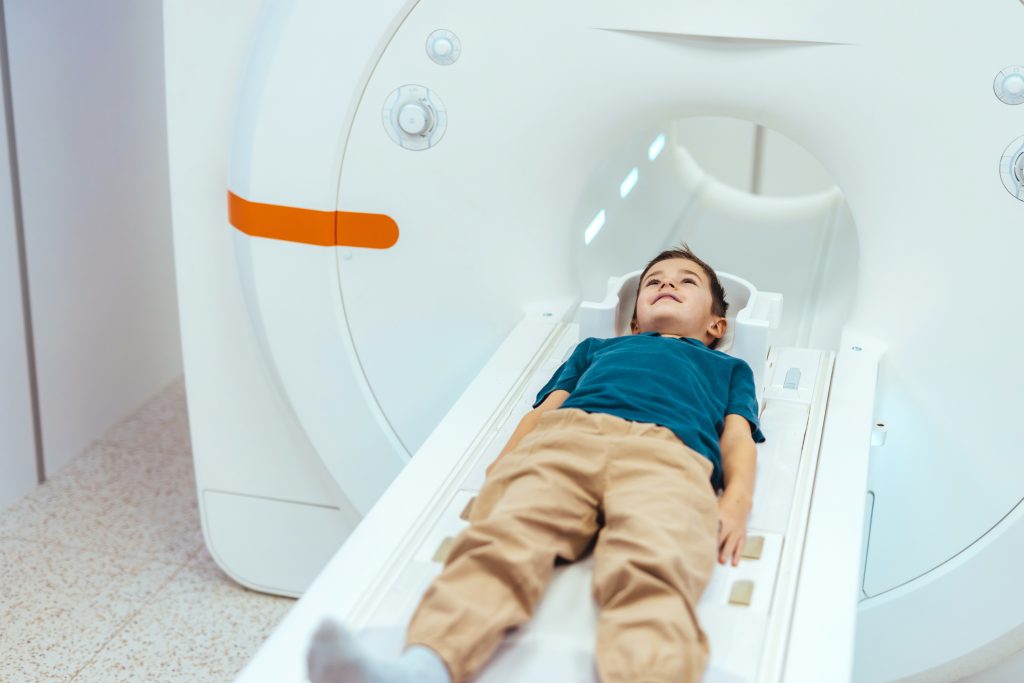
The next step would be to have a magnetic resonance imaging (MRI) scan done. An MRI is a safe and painless test that providers use to see the body’s organs and structures. MRIs give clear images of body parts that can’t be seen as well with an X-ray, CAT scan or ultrasound.
DIPG can typically be diagnosed after discussing the symptoms your child is experiencing and with the results of the MRI, which demonstrate a mass growing within the pons.
Biopsy
As mentioned above, DIPG can typically be diagnosed with the symptoms they’ve experienced and an MRI. But usually, a biopsy is recommended to confirm the diagnosis of DIPG. Plus, a biopsy may help with confirming the aggressiveness of the tumor and selecting the best treatment.
DIPG treatment
Many studies are underway to better understand the biology of diffuse brainstem gliomas and to find better treatments. We recommend discussing different treatment options with your health care provider.
Treatment options will depend on a variety of factors including your child’s health and well-being, the size and growth of the tumor, and more. Below we discuss some treatment options for DIPG.
Children’s Minnesota’s cancer and blood disorders program treats the majority of children with cancer and blood disorders in Minnesota, and provides patients access to a variety of clinical trials using ground-breaking new treatments.
Radiation therapy
Radiation therapy is the most common treatment for kids with DIPG. This type of therapy uses special X-ray beams to treat tumors. For DIPG, radiation is recommended to temporarily slow the tumor from growing. However, it is unfortunately not a long-term cure. This option can sometimes temporarily improve your child’s symptoms and possibly extend their life.
Radiation therapy often produces side effects such as temporary hair loss, nausea and vomiting, headaches and fatigue. Depending on the site of the treatment, long-term side effects also are possible. We will work with you and your child to reduce any side effects experienced from treatment.
Chemotherapy
Chemotherapy is a common treatment for different types of cancer. However, standard chemotherapy is not normally recommended to treat DIPG as it has not been shown to improve the outcomes of DIPG.
Surgery
Surgery is another common treatment for people with cancer. However, due to the nature of DIPG and its location, surgical removal is not recommended and is never done for DIPG. Because the brainstem holds vital structures (for breathing, heart rate, etc.), diffuse brainstem tumors cannot be surgically removed without causing intolerable side effects. Stereotactic biopsy, also known as needle biopsy, is typically recommended to confirm the diagnosis and to help determine prognosis and treatment options.
Sometimes children with DIPG experience a buildup of cerebrospinal fluid in the brain due to their tumor blocking the flow of spinal fluid. When the fluid builds up in the brain, it can cause increased pressure within the head. This can result in hydrocephalus. If that happens, your care team may recommend doing surgery to help relieve the pressure in their brain from hydrocephalus.
Clinical trials
A clinical trial is a research study that seeks to improve upon the currently used best-known treatment. It is done to see if a new treatment is safe and if it works better in treating cancer than the current approach.
Many patients with cancer, including DIPG, may receive treatment through a clinical trial. Clinical trials are the only way that new treatments will be discovered for DIPG. Children’s Minnesota participates in multiple national and international DIPG trials for which your child may be eligible. Children have to be eligible and consent to participate in a clinical trial.
Prognosis
We understand that as a parent, if your child is diagnosed with DIPG, you may have a lot of questions, especially about the treatment options and prognosis. Unfortunately, as of today, there are no cures for DIPG, and children typically do not live beyond two years after the diagnosis.
Questions to ask your care team
A DIPG diagnosis can be overwhelming as a parent and as a child. Here are a few questions to start conversations with your child’s provider:
- If any, what are the treatment options for DIPG?
- Are there any clinical trials that my child may be eligible for and that may help?
- Is there anything to ease the symptoms, side effects and pain my child is experiencing? What are your pain management options?
- What is the DIPG survival rate? Or, what is a typical prognosis for DIPG?
- What will my child’s life look like after diagnosis? What will their quality of life look like?
- Do you have any additional patient or family support you can provide?
Symptoms of late stage DIPG
Unfortunately, the symptoms of DIPG can get worse as the disease progresses. We recommend you talk to your health care provider about possible prescribed medications that could help manage some symptoms, side effects and pain.
Signs and symptoms of late stage DIPG include:
- Nausea and vomiting
- Difficulty swallowing
- Trouble speaking or slurred speech
- Issues with vision
- Increased numbness and weakness
Support for children and family
Childhood cancer can be hard on the child and the family. DIPG can be a difficult road for someone to experience. Because of that, it’s important to prioritize supporting your child as well as taking care of yourself and your family.
At Children’s Minnesota, we’re here to help you and your child navigate through this diagnosis. We believe that caring for the whole family leads to better outcomes. That’s why Children’s Minnesota offers not only best-in-class care, but family support, too. You’ll be supported by social workers, child life specialists (which includes music and art therapy, our medical dog program and more), psychologists, spiritual care, physical and occupational therapists, and so much more.
How the experts at Children’s Minnesota can help
If your child is diagnosed with cancer like DIPG, we understand it’s not easy news to hear. But we want you to know that Children’s Minnesota will be with you and your child every step of the way. We hope this has helped you understand DIPG more, including the symptoms, how a diagnosis happens, treatment options and more. The Children’s Minnesota cancer and blood disorders team is here for you and your family.
You’ll receive first-rate, compassionate care from the moment we meet in our cancer and blood disorders program.