
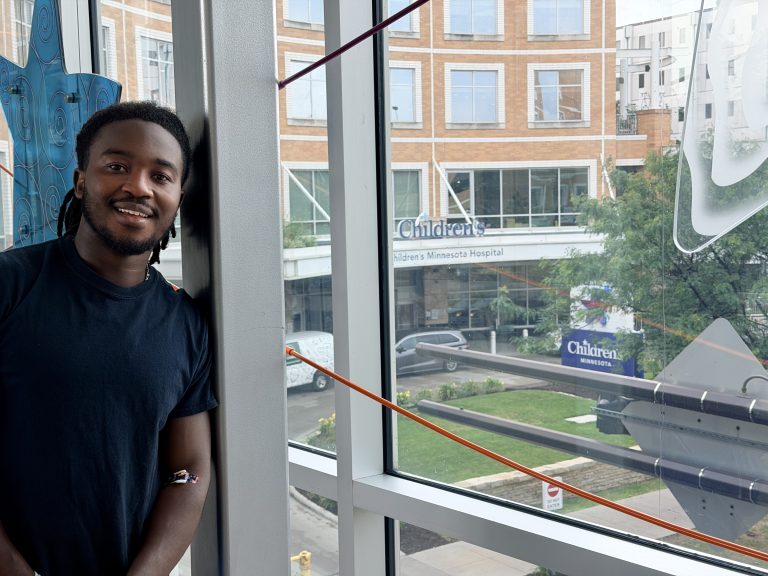
When Stephen first arrived at Children’s Minnesota, he was sick, exhausted and unsure of what was happening to his body. He was searching for answers, hoping doctors could figure out what was going on. The care team suspected cancer but wasn’t sure what type. After more testing, they confirmed he had acute lymphoblastic leukemia (ALL), a type of blood cancer that affects the body’s white blood cells.
Stephen was just 16 years old and about to start his junior year of high school.
A life-changing diagnosis
Hearing the word “cancer” did not feel real at first. It was hard for Stephen to process. It wasn’t until later — after weeks in the hospital, and a long road of treatment still ahead, that the weight of the diagnosis truly set in.
“When I came back home after the first stage of my treatment, it really hit me,” Stephen said.
Care designed for teens and young adults
As a teenager facing cancer, Stephen was cared for through Children’s Minnesota’s adolescent and young adult (AYA) cancer program. It’s specifically designed to meet the unique needs of cancer patients between the ages of 15 and 30. These patients are often balancing treatment with school, relationships and plans for the future.
“Research shows that teens and young adults with cancer often respond best to pediatric treatment approaches,” said Chelsea Self, MD, program director of the AYA cancer program at Children’s Minnesota. “Through our program, we deliver a specialized model of medical care that also supports the emotional and life needs that are so important during this stage in a person’s life.”
Stephen went through about two and a half years of chemotherapy. The schedule was intense at times. Some weeks he received treatment in the clinic three days a week. While going through treatment, he also finished his last two years of high school and began attending Augsburg University.
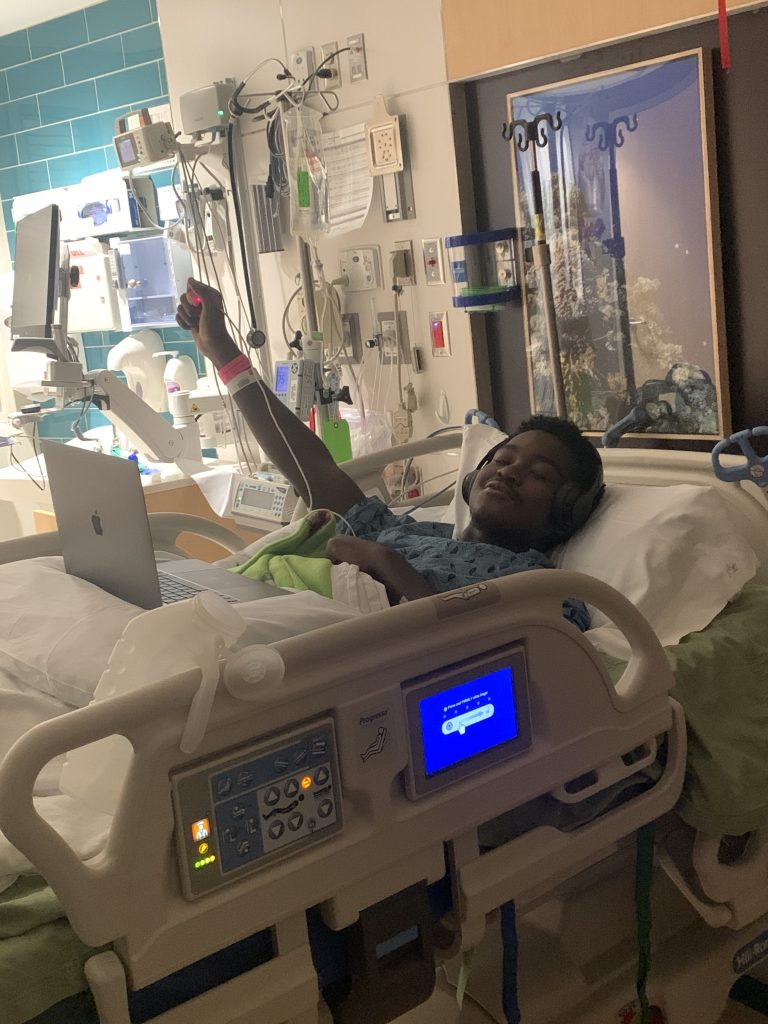
“Being treated in a program that understood what it meant to be a teenager going through cancer while also managing school made a huge difference,” said Stephen. “They helped me keep moving forward, even when things were really hard.”
Compassionate care
Throughout treatment, Stephen says the care team took time to understand who he was — not just what he was going through. He built a close connection with his oncologist, Lane Miller, MD.
“He was super down to earth,” Stephen said. “We talked about basketball and football. I felt like he knew who I was. I wasn’t just a diagnosis. I was a person.”
Nurses played a major role in helping him through the hardest days. He remembers them checking in on him during long clinic days and finding ways to make him laugh.
“All the nurses were amazing,” he said. “They made me feel seen and cared for.”
Stephen also credits his community outside the hospital for supporting him during treatment. Family and friends would bring him to and from appointments and bring him meals. His high school teachers worked around his chemo schedule and gave him flexibility with assignments. One teacher even adjusted a college‑credit class so Stephen could still participate. All of these small acts meant a great deal during a difficult time.
Finishing treatment
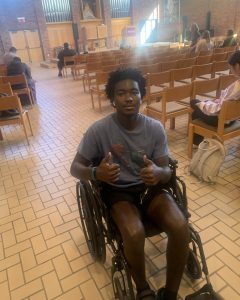
When Stephen finished treatment, the moment felt almost unreal.
“When I first heard I would do chemo for two and a half years, it felt like that day would never come,” said Stephen. “The day I finished was amazing.”
After his last treatment, Stephen’s care team surprised him with cards filled with handwritten notes. The notes are now up on the wall of his dorm room.
He continues to return to Children’s Minnesota for follow‑up visits every six months and says it’s bittersweet not seeing his care team as often.
Looking back, Stephen knows how overwhelming a cancer diagnosis can feel — especially for teens and young adults. He shared advice for others facing a similar experience.
“It may feel like the end of the world,” Stephen said. “But you’ll get through it. Be patient and kind with yourself, and look for the people who make the hard times a little better.”