
Too many kids learn to hide their pain. Too many never see a therapist who reflects who they are, appreciates their culture or understands their experiences. These are the important truths Aujani Davis, a program therapist in the Children’s Minnesota partial hospitalization program, shares with us in honor of National Minority Mental Health Awareness Month.
Aujani reminds us that supporting our children’s mental health starts with listening, talking more openly, understanding their cultural and community needs, and making sure every child knows they aren’t alone.
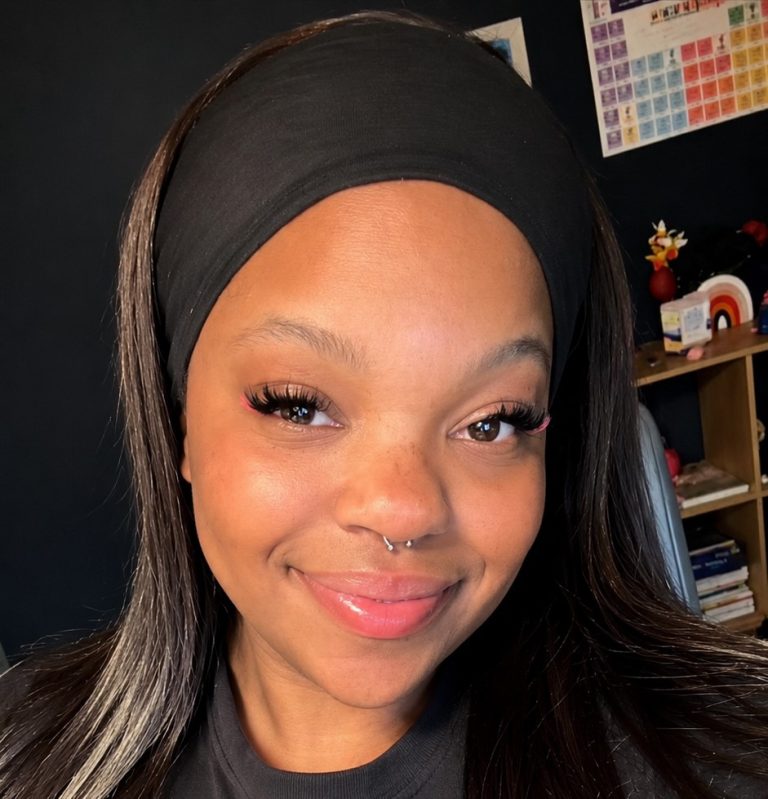
What does National Minority Mental Health Awareness Month mean to you personally?
Aujani Davis: To me, it isn’t just an observance on a calendar. National Minority Mental Health Awareness Month is a deep personal reaffirmation of why I do this work every day. It sheds light on people of color and the unique cultural pressures that often go unrecognized in a traditional mental health setting. Across several communities of color, mental health is ignored or minimized, so having a month can help us feel more comfortable and open talking about such a taboo topic! This month will allow so many of us who are struggling to learn more about ourselves mentally and to find resources to receive help. It brings a sense of community at a time where you feel most alone.
What does it mean to you professionally?
Aujani Davis: Minority Mental Health Awareness Month is about legacy. It’s an opportunity to educate parents, schools and communities on how emotional distress presents in kids of color – where anxiety or trauma might be misidentified as “behavioral issues” or anger. By intervening early, validating their feelings, and equipping them with healthy coping strategies, we are breaking cycles of unaddressed pain and empowering the next generation to prioritize their mental well-being without shame. Ultimately, this month is a call to action. It’s a promise to keep fighting for equitable access to mental health resources, to advocate for our youth in systems that often overlook them, and to celebrate the rich, beautiful resilience of our communities while making space for true healing.
Why do you think it’s important to dedicate time and attention to the mental health of young people who are Black, Latino, Asian and Native American?
Aujani Davis: If we don’t intentionally dedicate time and care to our Black, Latino, Asian and Native youth, we leave them to navigate an extraordinarily heavy world completely alone. These kids are carrying unique, layered burdens and when their pain is ignored, it doesn’t just vanish; it shapes who they become. Investing in their mental health isn’t about giving them “special treatment,” it’s about giving them a fair shot to just be kids, to feel deeply understood, and to heal so they can grow into the whole and joyful humans they deserve to be.
What feels most urgent to you right now when it comes to mental health and communities of color?
Aujani Davis: What feels most urgent is that we are still losing our kids to silence because we aren’t talking about mental health enough within our homes! We can advocate for better policies and more therapists of color all day long, but none of that reaches a child if they feel like bringing up their pain at home will bring shame to the family, be brushed off as a lack of faith, or be met with “you have nothing to be sad about.” We have to break the generational habit of sweeping our hurt under the rug. Normalizing mental health starts in our living rooms — when parents model vulnerability, check in on their kids’ emotional well-being just as much as their grades, and replace “be strong” with “I’m here, and I listen.” If we want our communities of color to truly heal, we have to make our homes the very first place where our children learn that it is safe to be human.
What would you say to a young person who is Black, Latino, Asian or Native American who is struggling with their mental health?
Aujani Davis: You are seen! I see your humanity, your beauty and your struggle, and you don’t have to hide any part of who you are to be worthy of love, care and a safe place to heal. YOUR LIFE MATTERS.
What does representation mean in mental healthcare, especially for young people who may not often see therapists who look like them?
Aujani Davis: Representation in mental health is a lifeline. Nationally, Black therapists make up a small fraction of the workforce, which means many children of color go their entire lives without ever seeing a therapist who looks like them or intrinsically understands their lived experience. When a Black child sits across from me, they don’t have to spend energy explaining the subtle impact of microaggressions, code-switching or how racial stress feels in their body. They get to just be a kid. National Minority Mental Health Awareness Month is a reminder of how critical it is to expand access to culturally congruent care so every child feels truly seen, safe and understood.
For young people who are Black, Latino, Asian and Native American, what additional pressures or barriers can affect their mental health?
Aujani Davis: When I look at our kids, whether they’re Black, Latino, Asian or Native American, I see young people carrying a heavy weight that most of the world completely misses. On top of standard teenage stress, they’re constantly absorbing the quiet ache of microaggressions, racial trauma and the pressure of walking into spaces where they aren’t fully understood or seen. Too often, they face deep-seated cultural stigma at home, where asking for help feels like “airing dirty laundry” or disappointing the family, while outside the home they run into a mental health system that wasn’t built for them.
We are so quick to label their pain as “acting out” Whether it’s an Asian teenager crumbling under the silent pressure to be perfect, a Latino child trying to bridge two totally different cultural worlds, a Native youth dealing with the deep roots of generational grief, or a Black child being told to “be strong” when they just need a break. These kids aren’t failing to cope; they’re trying to survive in a system that makes healing way harder than it should be.
How can health systems like Children’s Minnesota build access and trust when it comes to the mental health of young people who are Black, Latino, Asian or Native American?
Aujani Davis: It starts with representation and making sure we, as an organization, mirror the populations that we are working with, which means placing an emphasis on hiring more staff of color! It also means:
EDUCATING the staff that we currently have. This does not mean a yearly diversity education class. This needs to be something that continues to be emphasized because the impact it has on our patients is huge. No one is an expert when it comes to cultural competency. Ask questions and be aware of your own biases to learn from them!
LISTENING to our patients. They are more than just their symptoms and diagnosis. This can allow the patient to feel seen and heard.
What drew you to working with young people?
Aujani Davis: Children and adolescents are so incredibly fun to work with! Their resilience alone is so inspiring as they continue to show up every day despite what they have been through. I am so blessed to be able to come to work every day. I get to play games, listen to music, be creative with art all while learning more about my patients and being that safe adult that so many of our children (especially children of color) do not always have.
What gives you hope in your work?
Aujani Davis: In my work specifically, I work with children and their families. What continues to give me hope is working 1:1 with families of all different backgrounds and having those difficult conversations and normalizing those scary or unsafe feelings. Being able to see a caregiver or parent’s perspective shift as they learn more about their child gives me the hope that the work we are doing can be continued in the home which in turn benefits the child. Seeing the kiddo’s progress and feeling more comfortable within themselves and being able to speak up about things they previously kept to themselves provides me with hope that we are making a difference in this field.
If a parent or caregiver is worried about their child’s mental health but unsure where to start, what would you want them to know?
Aujani Davis: Trust your gut. You know your child better than any doctor, teacher or textbook ever could. If you feel like something is off, that instinct is real and worth listening to. You don’t need all the answers or the perfect clinical vocabulary to start; you just need to be their biggest champion. Continue to fight for the support they deserve! You know your kids’ heart, behavior and story so speak up and ask the hard questions. Keep pushing until you find a provider who truly sees, respects and listens to the both of you.
James Burroughs: Thank you, Aujani, for sharing your voice, your wisdom and a reminder about the best thing we can do for our kids’ mental health. For a deeper look at equitable health care for all, please listen to my discussion with Dr. Joseph L. Wright, chief health equity officer and senior vice president at the American Academy of Pediatrics.
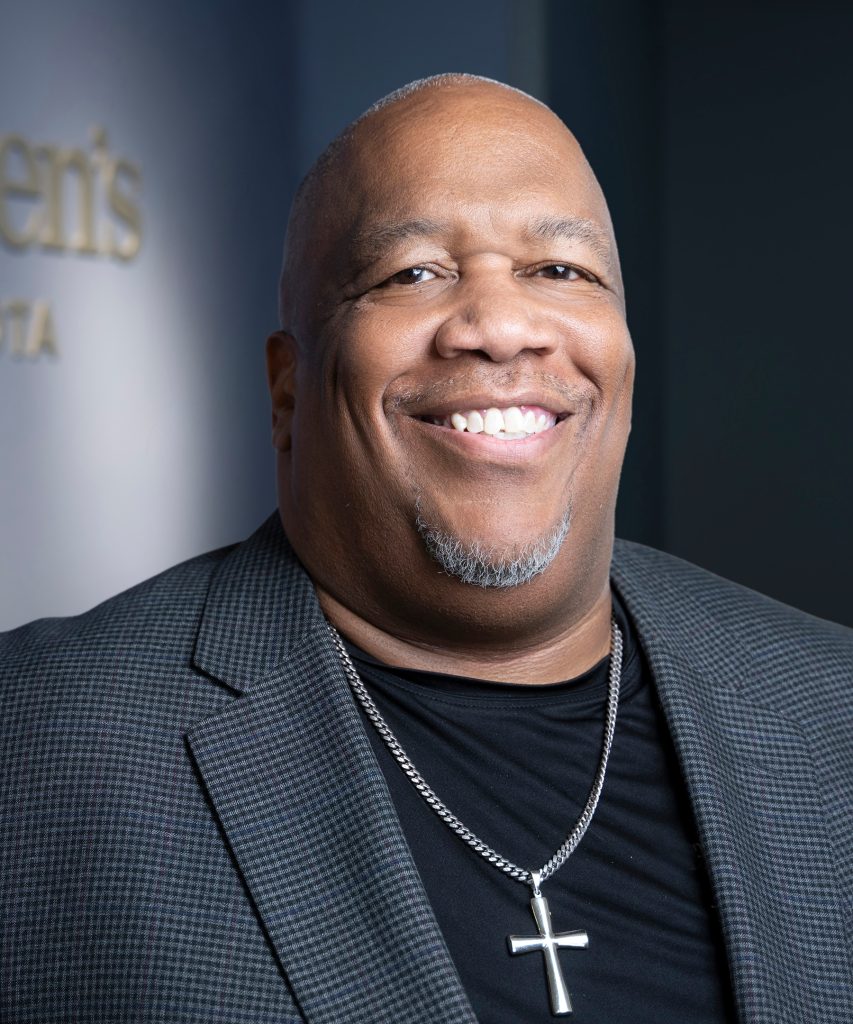
James Burroughs
Senior vice president, government and community relations, chief equity and inclusion officer
James Burroughs joined Children’s Minnesota as its first chief equity and inclusion officer in 2019. He is responsible for advancing equity and inclusion in all parts of the organization.
Follow James on LinkedIn.