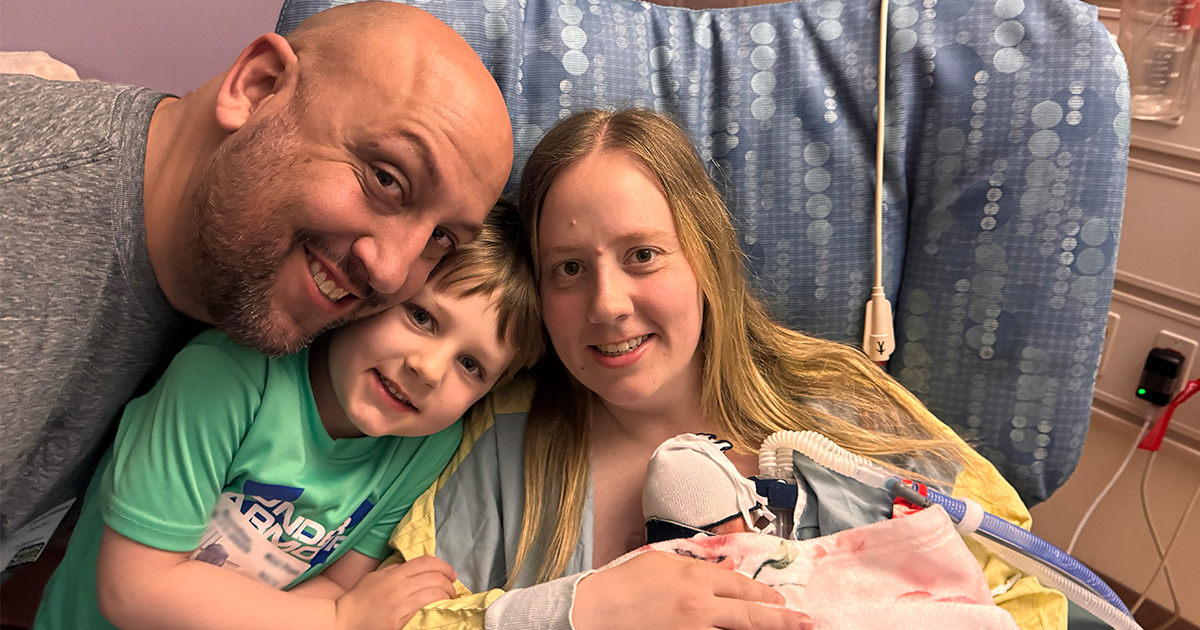

After successfully undergoing epilepsy surgery at less than 3 months old, Lorelei is now seizure-free and thriving.
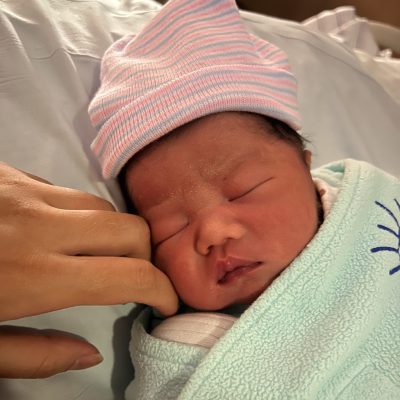
When Lorelei was born on April 15, 2026, her parents, Nkaujfuah and Jonathan, had no reason to believe that her early days would be any different from her older brother’s. But when she was just a few days old, they noticed something was wrong. She would stiffen, turn red and look to the right. Then she would return to normal.
The moments were brief but odd enough that her parents took notice.
Journey to a diagnosis
Her parents first brought her to the pediatrician and asked about what they were noticing. The doctor initially thought that her symptoms were just a sign of reflux.
But at just 4 days old, Lorelei stopped taking her bottles and turned blue. Her family rushed her to the emergency department. It took multiple visits to the emergency department to figure out what was happening. Finally, they found out that Lorelei was experiencing epileptic seizures.
In babies, seizures can be particularly hard to diagnose because many of the signs may look similar to normal baby movements, rather than the shaking many people expect.
Lorelei’s first few weeks went by in a blur of clinic and hospital visits. The family was referred to Nitin Agarwal, MD, medical director of pediatric epilepsy at the Minnesota Epilepsy Group. Children’s Minnesota, in partnership with the Minnesota Epilepsy Group, is designated a Level 4 epilepsy center that provides the highest level of care for children with epilepsy. Dr. Agarwal explained what was happening to Lorelei. MRI scans showed that the left hemisphere, or left side of Lorelei’s brain, had not developed properly and was causing the seizures.
Searching for the right treatment
Lorelei started her first seizure medication at just 6 days old, but the seizures stopped for only a day. A different medication stopped her seizures for a week. Then they came back again.
“Everything was so new to me. I felt very confused. Why is this happening to her?” Nkaujfuah said, recalling the early days.
Lorelei continued to try multiple medications to stop her seizures, but the result was always the same — they would always return. Lorelei would have 10 to 50 seizures a day, often happening back-to-back and lasting up to 25 minutes.
Early on, the seizures caused her arms and legs to jerk as she smacked her lips and her skin turned blue. In the weeks leading up to surgery, she would stare off, crunch her body inward and extend her arms.
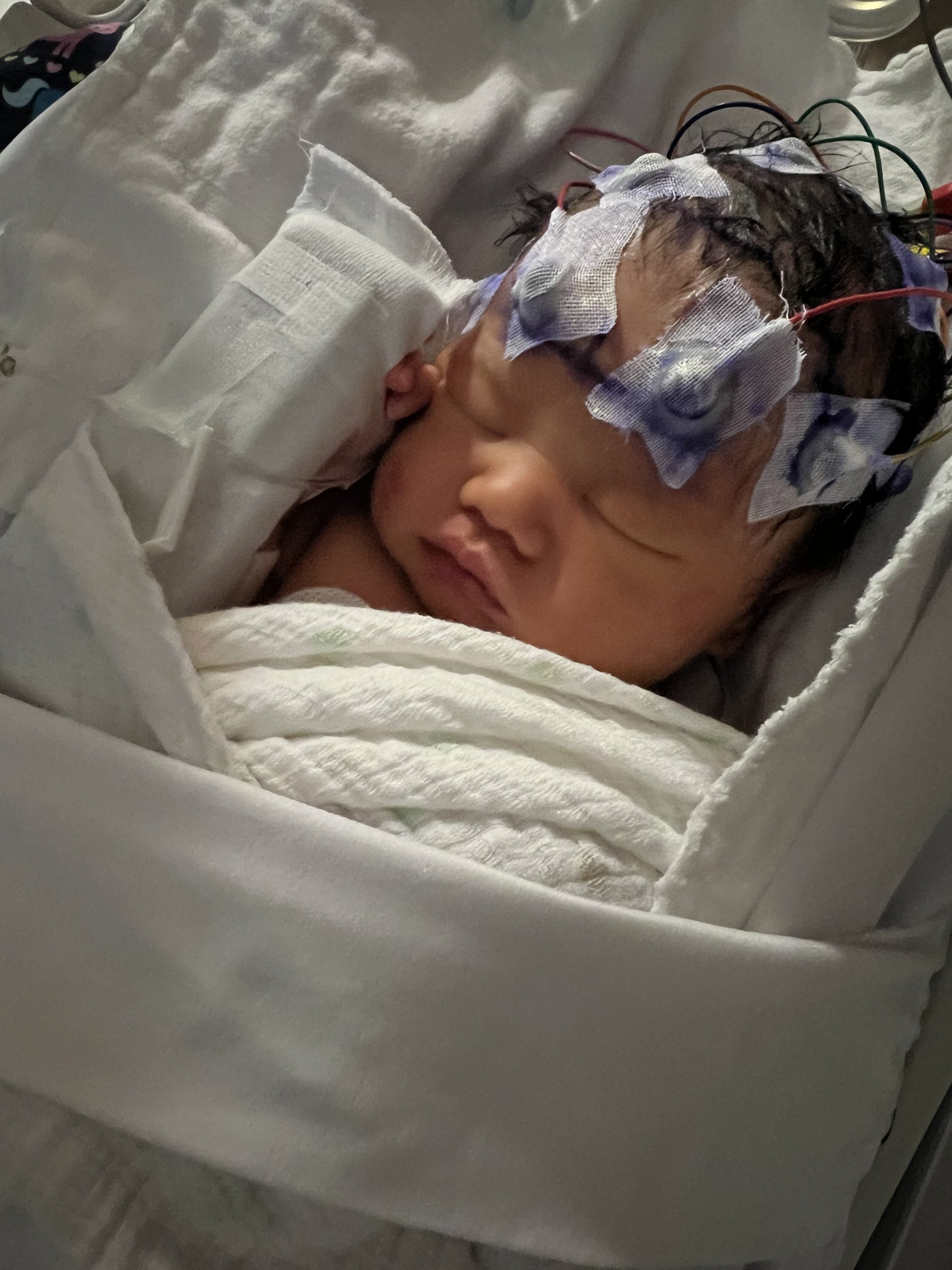
Dr. Agarwal told her parents that if Lorelei continued to have seizures, they needed to bring her to Children’s Minnesota in Minneapolis immediately.
“When a baby has this many seizures, it’s incredibly dangerous and life threatening,” said Dr. Agarwal. “Lorelei’s brain was still developing, and we needed to stop the seizures as quickly as possible to give her the best opportunity to grow and develop. When multiple medications failed to stop her seizures, we knew we needed to consider another treatment option.”
When Lorelei was 5 weeks old, Dr. Agarwal told the family that it was time to consider surgery. Over the next week, a multidisciplinary epilepsy surgery team, including pediatric epileptologists, neurosurgeons, neuroradiologists, neuropsychologists and other specialists involved in epilepsy care, discussed her case. They all agreed: brain surgery was her best chance for a seizure-free life. The team recommended a hemispherectomy — a complex neurosurgical procedure to disconnect the neural pathways between the left and right sides of the brain.
Brain surgery
The neurosurgery team at Children’s Minnesota had wanted to wait as long as possible for Lorelei to grow before surgery. The original plan was to wait until she was 4 months old, allowing her time to gain weight and develop. This is important because the smaller the baby, the higher the risks during surgery.
But when Lorelei was just 2 and a half months old, her seizures became more aggressive. Her face would twitch, and her body would completely stiffen. She was on four seizure medications — none of which were working.
After meeting with Meysam Kebriaei, MD, medical director of neurosurgery at Children’s Minnesota, the family grew more confident in the plan. He explained that Lorelei was having too many seizures and the team had to act. Brain surgery was her only chance, and waiting was no longer an option.
The team scheduled Lorelei’s surgery for July 13, 2026— just two days before she turned 3 months old. The surgery would take place at Children’s Minnesota, home to a Level 4 epilepsy center that provides the highest level of care for children with epilepsy.
Lorelei was one of the youngest babies in the country to undergo this type of surgery.
“I was just really scared. Having to hand her to surgeons and trust them with her life … that was hard,” said Nkaujfuah.
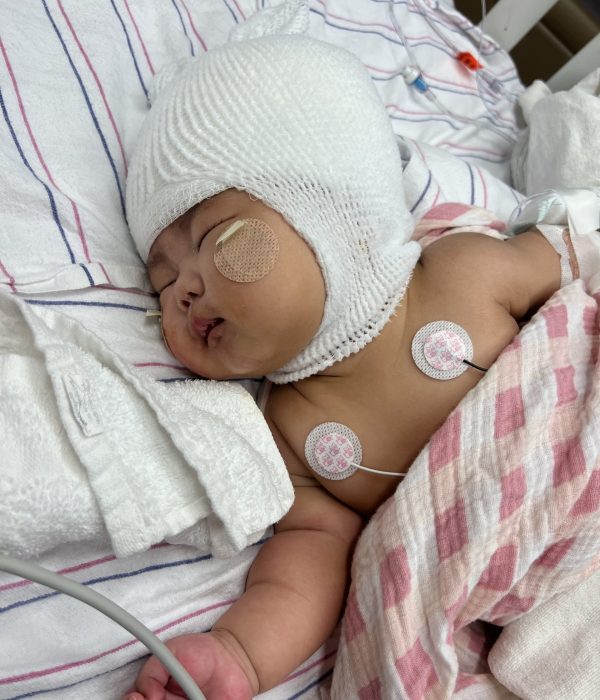
Dr. Kebriaei and Benjamin Best, MD, pediatric neurosurgeon, led the surgery, supported by a multidisciplinary team of other pediatric specialists. Throughout the eight-hour surgery, Nkaujfuah and Jonathan received regular updates. The surgery was a success. Lorelei was brought to the pediatric intensive care unit at Children’s Minnesota, where she recovered for three days.
The family felt relieved but knew they still had a long road ahead. Nkaujfuah remembers thinking Lorelei looked like a Cabbage Patch Kid after her surgery with her head wrapped snuggly in gauze. For the first time, the family felt hopeful.
Lorelei today
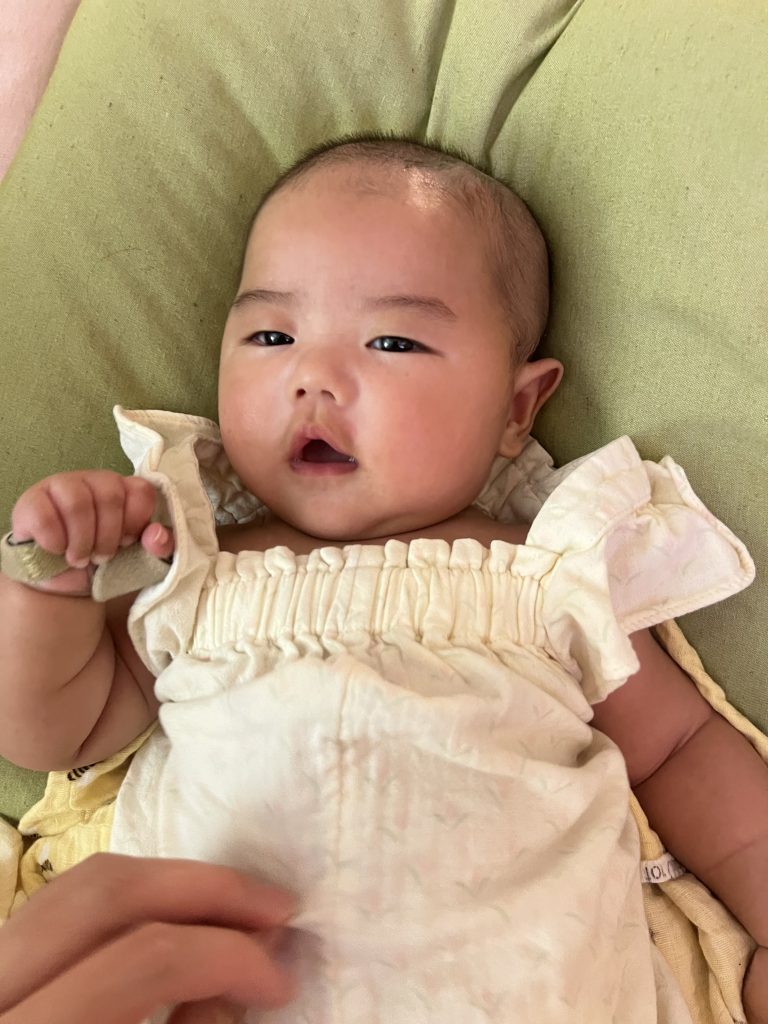
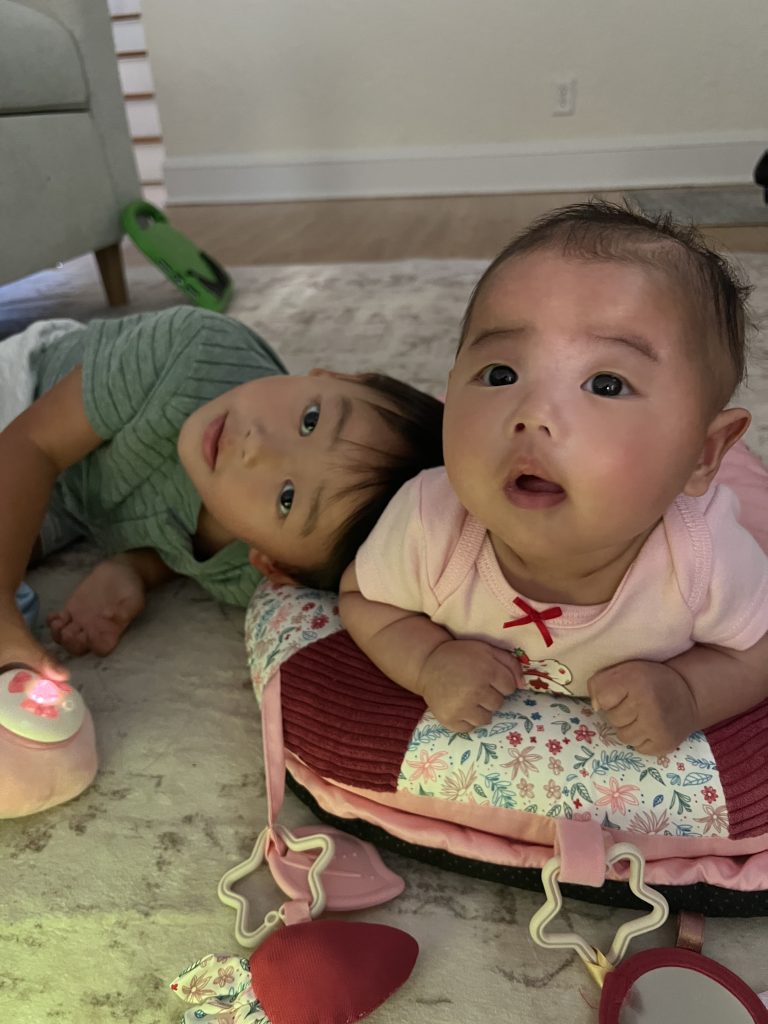
Since surgery, Lorelei has been seizure-free. She still has numbness on her right side which is expected after her brain surgery. She continues to make steady progress. She has regular follow up appointments with physical and occupational therapists at Children’s Minnesota to strengthen her right side as well as check-ups with Dr. Agarwal and Dr. Kebriaei. As a happy and smiley 6-month-old, Lorelei loves tummy time and is learning to roll over.
“Seeing Lorelei thrive is exactly why we love what we do,” said Dr. Kebriaei. “At this young age, her brain has a remarkable ability to adapt and form new connections. Because she received the care she needed at the right time, we’re optimistic about her future. Now that her seizures are behind her, the sky’s the limit for Lorelei.”