
Did you know? More than 40 million children and adults in the United States have diabetes according to the American Diabetes Association (ADA), and 1.5 million are newly diagnosed each year. Diabetes is a chronic condition that must be managed 24/7, which can often be difficult for families — especially when receiving a new diagnosis.
At Children’s Minnesota, we care for more patients with type 1 diabetes (T1D) than any other medical center in Minnesota!
In honor of National Diabetes Month in November, we sat down with Julia Musser, BSN, RN, endocrinology nurse at Children’s Minnesota.
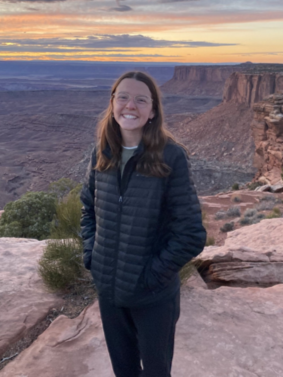
Get to know Julia!
Tell us about your role at Children’s Minnesota.
“As a nurse in the diabetes and endocrinology department at Children’s Minnesota, I work with patients and families with a wide range of endocrine conditions, including thyroid disorders, growth hormone deficiency and adrenal insufficiency. I get to work alongside providers and other staff members to help support patients and families over the phone and in the clinic by answering medical questions, doing educational appointments and supporting other needs they have.”
What inspired you to become a nurse in the diabetes and endocrinology department?
“I have always loved the endocrine system and learning about the complexity in which the hormones in our body work. As a person with type one diabetes (T1D), I have spent a lot of time as a patient in an endocrine clinic myself and have been so grateful for my care team. Getting to work as a nurse in the diabetes and endocrinology department has allowed me to be a part of the care team for patients with multiple types of endocrine diagnoses, many of them quite complex, allowing me to support patients and families the way that I have been supported.”
What is your own personal journey with diabetes?
“I was diagnosed with T1D while I was in nursing school. I had to do a fasting blood glucose as a part of a class assignment, which turned out to be abnormally elevated, but not high enough where I was having any noticeable symptoms. This set off a series of further testing that shortly after led to my diagnosis. It was a whirlwind. I remember being very overwhelmed, but I was lucky to have been diagnosed accidentally, which led to getting the treatment I needed earlier than I likely would have.
“Because my diagnosis was made so early in terms of the disease process, I have experienced the “honeymoon phase” and many changes with my own blood glucose management and insulin requirements. Most recently, I have experienced T1D in pregnancy as I am currently in my third trimester with my first baby. Living with T1D definitely comes with its challenges, but it has also given me so much to be grateful for as I have a renewed sense of awareness of the way my body works and what I am capable of.”
What do you want patients, families and/or staff to know about the work you do?
“Working with patients and families in the diabetes and endocrine department is a team effort, and the patient and family get to be a part of that team. I am so grateful to partner with patients and families in helping to support them on their medical journey. There is often so much work that goes on “behind the scenes” when taking a patient’s phone call or responding to their medical questions. We all play a role in the patient’s care, including the endocrine provider, nursing staff, prior authorization team, medical assistants, etc. We all have the same shared goal of meeting each patient and family where they are at and to support them with whatever they need.”
If you could give one piece of advice to someone recently diagnosed with diabetes who is feeling overwhelmed, what would it be?
“The diagnosis of diabetes can be so overwhelming as there’s a lot to learn, and the impact on daily life is drastic, but you are not alone! There is beauty in getting to learn about the intricate way your body works with this diagnosis and getting to celebrate your successes when you are able to put into practice everything you have learned.
“Living with diabetes has taught me a deeper sense of gratefulness for everything that I get to experience and achieve. You can continue to live your life to the fullest and reach for your wildest dreams while having T1D.”