
Two Children’s Minnesota nurses selected for panel to revise ANA Code of Ethics
Two Children’s Minnesota nurses, Shika Kalevor, MBE, BSN, RN, HEC-C, clinical ethicist, and Ian Wolfe, PhD, MA, RN, HEC-C, director of ethics, were selected to participate in the 2025 panel to review and revise the guiding ethical standards for all nurses in the United States. The American Nurses Association (ANA) Code of Ethics (The Code) outlines the ethical values, obligations and duties of every nurse, and serves as the profession’s ethical standard, reminding every nurse of their commitment to society.
Kaelvor and Wolfe were two of 49 experts who, according to the American Nurses Association, spent more than 600 hours refining The Code to address key issues like health disparities, racism, allyship, workplace safety, and emerging technologies. The Code is reviewed every 10 years.
“My favorite part of this experience was the ability to collaborate with people from across the country who represent such diverse backgrounds and disciplines,” said Kalevor. “Our group had nurses in academics, hospital settings, ethics, advocacy and so much more. This diversity spread across identity, generations and experiences. I learned so much from the conversations we had over the past two years; to see it come to fruition [was] very fulfilling both personally and professionally.”

Shika Kalevor
“Clinical ethics is a discipline that applies an analytic method to how value is assigned, interpreted and negotiated in relation to medical facts,” said Wolfe. “As health care has become more complex, there is more we know, but also more uncertainty [despite] or because of that knowledge. And most parents and patients, and even clinicians, haven’t had to spend time thinking about how different values might align with these considerations. Clinical ethicists are trained to help everyone navigate these spaces.”
Kalevor and Wolfe’s selection reflects both their individual expertise and Children’s Minnesota’s leadership in advancing ethical standards across the nursing profession.

Ian Wolfe
Nursing and advanced practice research featured on new webpage
Children’s Minnesota nurse and advance practice researchers are making a big impact in fulfilling our vision to be every family’s essential partner in raising healthier children – and now you can easily read about their impressive efforts on a new webpage that features their work.
Nurses and advance practice researchers continue to lead and participate in research studies, evidence-based practice projects, and quality improvement initiatives. From PIV-C insertion and telelactation support, to simulation-based education and mitigating moral distress, their projects cover a wide range of topics.
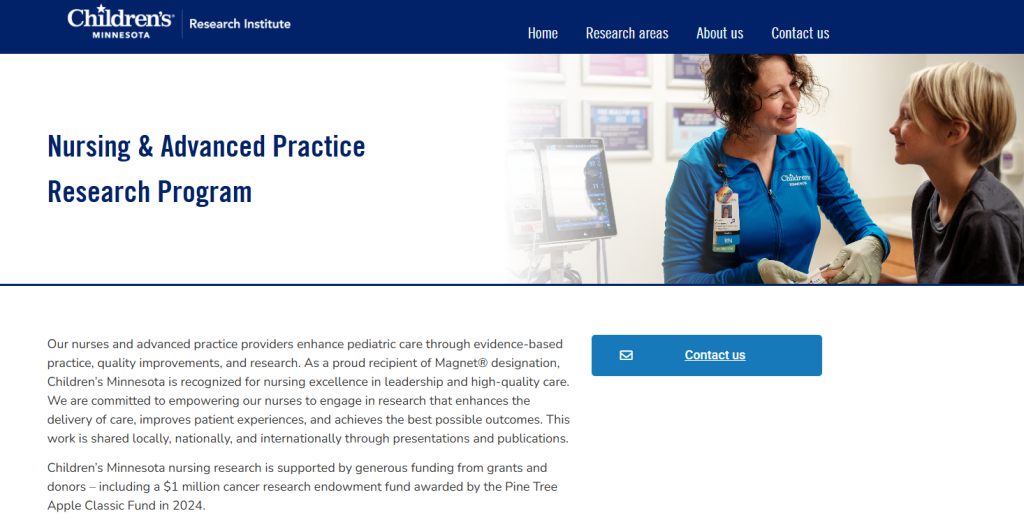
Children’s Minnesota nursing research is supported by generous funding from grants and donors – including a $1 million cancer research endowment awarded by the Pine Tree Apple Classic Fund in 2024. The endowment supports nursing and advance practice provider research across the pediatric oncology care journey, with a focus on the unique needs of patients in survivorship, improving patient-reported outcomes, mitigating distressing symptoms and toxicities of care, and improving the care experience.
By spotlighting this work in one place, the new webpage reinforces Children’s Minnesota’s commitment to discovery, collaboration and continuous improvement in nursing care.
Preparing the nurses of tomorrow
The future of nursing grew a little brighter with the graduation of 18 student nurse interns in August 2025. Collectively, they were a dedicated, enthusiastic group that showed tremendous growth during their time at Children’s Minnesota. We wish them our sincerest best wishes as they prepare for a future in nursing.
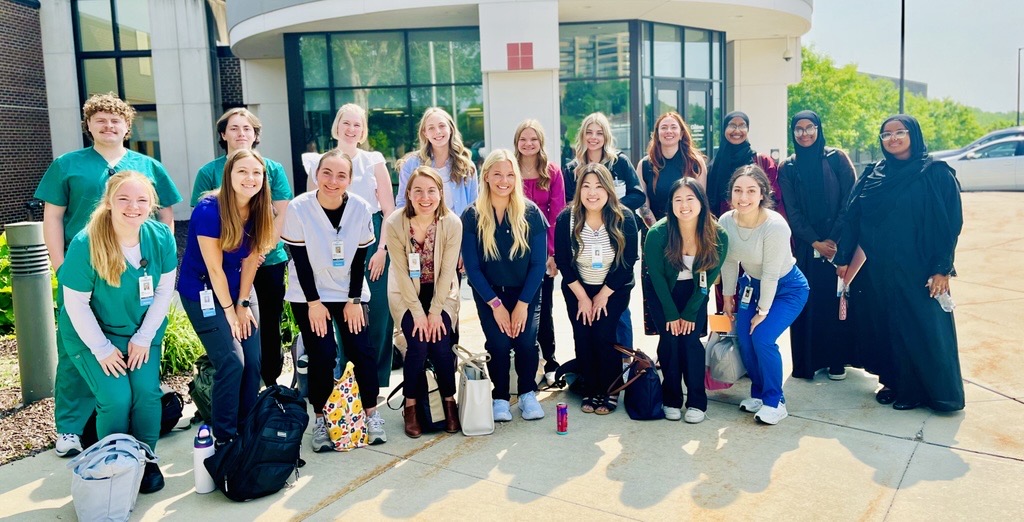
The nursing internship program’s success wouldn’t be possible without the support it received at the unit level, including:
- Unit leaders who engaged, mentored and created a welcoming environment for our interns.
- Clinical educators who supported and scheduled each intern, ensuring they received a comprehensive learning experience.
- Preceptors who worked diligently at the bedside, sharing their expertise and guiding our interns through hands-on learning. More than 40 preceptors supported our 2025 interns.
The commitment of our unit teams to the nursing internship program was, and continues to be, truly instrumental in shaping the next generation of nurses.
Ana Brown, cancer and blood disorders clinic nurse, presented photobiomodulation research at national conference
Photobiomodulation (PBMT), or red light therapy, is very beneficial in preventing and treating chemotherapy-induced mouth sores, but it is better suited for inpatient settings, according to a 2024 evidence-based practice (EBP) project by Ana Brown, BSN, RN, CPHON, CCRP, cancer and blood disorders (CBD) clinic nurse. This was the focus of a presentation Brown gave at the Association of Pediatric Hematology/Oncology Nurses (APHON) conference in 2025.
Brown’s presentation shared additional insights from her study, including PBMT use in outpatient settings, strategies to overcome implementation barriers, and the work that led to PBMT becoming the standard of care for Children’s Minnesota chemotherapy patients at risk for mouth sores.
The attention Brown’s EBP project received at the conference spurred others to consider new collaborative opportunities as well. “I was able to do some networking around the topic at the conference and have ideas for future research projects that may involve multi-site collaboration,” said Brown. “I was also able to call out the need for national advocacy for broader coverage of PBMT and supportive cares for our patients, and connect with the APHON advocacy team on ways this could potentially happen.”
Acute care simulations refine critical skills and bring teams together
High-risk emergency events are rare, but as we saw in 2025, they happen and our teams must respond quickly and effectively. In 2024, our acute care teams recognized the need for opportunities to practice simulated high-risk events together in a safe and structured setting. Simulation provides a collaborative environment where staff can build confidence, strengthen communication, and refine clinical skills without the pressure of real-time emergencies.
In 2025, every acute care unit completed two simulation days, each offering two sessions focused on essential topics like anaphylaxis management, resuscitation events, and skills labs. These sessions were designed to replicate realistic, critical scenarios while maintaining a low-stakes atmosphere to promote learning. Participants included nurses, respiratory therapists, advanced practice providers, medical providers, clinical support associates, residents, medical students and nursing students.
The feedback from participants has been very positive, including comments praising the value of working together as a team, meeting colleagues, and practicing in a supportive environment. Many participants shared that these simulations improved their readiness for actual emergencies.
Acute care simulation days will continue in 2026, and in some cases, expand to multi-unit events for even greater collaboration. At Children’s Minnesota, our mission calls us to deliver the highest quality, patient- and family-centered care. Continuous learning is essential to fulfill this mission.