
April 14-18, 2025, is Music Therapy Week at Children’s Minnesota! This week we are celebrating board-certified music therapists and the joy, inspiration and healing they bring to patients and families. At Children’s Minnesota, we are grateful for our team of music therapists who make a positive impact in the lives of our patients and families.
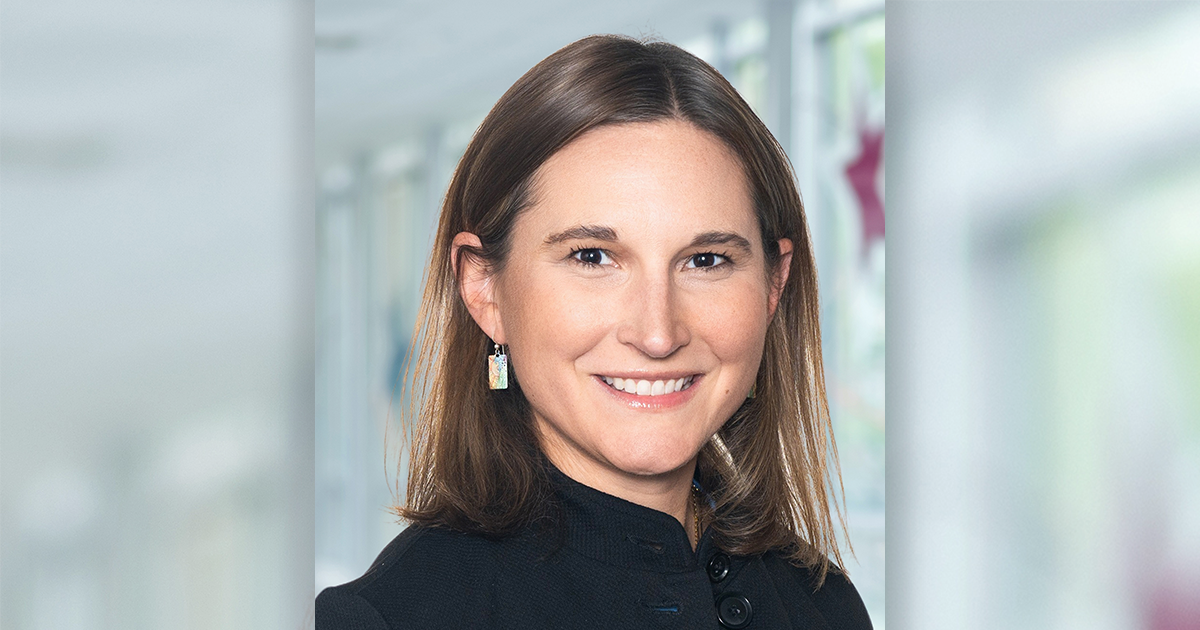
During Music Therapy Week, we are excited to highlight Children’s Minnesota kid expert and board-certified music therapist, Sarah Woolever. Sarah primarily works with neonatal patients at our Minneapolis hospital
Get to know Sarah!
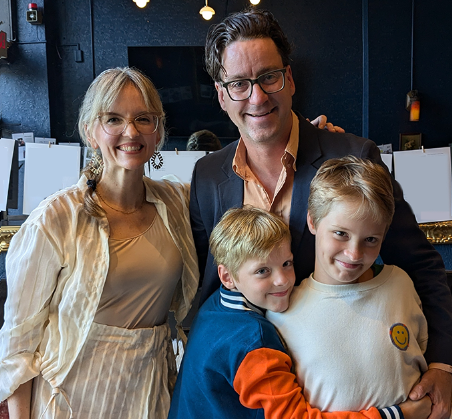
Tell us about your role and how long you’ve worked at Children’s Minnesota.
I’m a music therapist and the music therapy national roster internship director. I’ve worked at Children’s [Minnesota] for 13 years; first as casual, then steady .8 FTE on both campuses. Now, I work full-time at our Minneapolis hospital, primarily on the neonatal units.
What inspired you to become a music therapist, particularly in the field of pediatrics?
I grew up playing and singing music with others in bands and choirs. It became clear to me how sharing music is a powerful way to interact, socialize, celebrate and express myself with others. In my experience, music creates an intimacy with others that crosses languages, ages, abilities and cultures. I still get together with my high school marching band buddies because of our band camp bond!
As I began thinking about what came after high school (and marching band), I felt pulled to work with people – either in the social work or talk therapy field – but then I got a flyer about music therapy! This was a career combining my interest in working with people and my love of music “tutti” or altogether!
What are some of the musical instruments or tools you find most effective in your work?
Working in the neonatal units, my voice is my primary instrument. For premature infants, voices are the preferred auditory stimulus because it’s what’s most familiar to them and what they can safely manage as their auditory systems are developing. Because voices are a stimulus that infants know, they startle less and can relax more. I love encouraging parents to use their voices as comfort tools for their babies. It’s so accessible and is developmentally supportive for our smallest patients.
I also often use our recording equipment in the infant units as well. I can record infant heartbeats for legacy or keepsake items using our digital stethoscope. I collaborate with families to create something individualized and truly special just for them. I can also record family voices to be used for comfort or developmental stimulation for babies >32 weeks when caregivers cannot be at the bedside.
Our music therapy department just acquired a grant from the Forever Young Foundation and Sophie’s Place for two new recording carts on both campuses. This grant will result in higher quality recordings and expanding the options for patient projects. Get ready for some incredible patient and family tunes!
How does music therapy continue to a patient’s overall well-being?
Music therapy contributes to a patient’s overall well-being by being a nonpharmacological intervention that can decrease pain and support comfort throughout the patient’s admission. More comfort means patients can get back to doing their rehabilitation exercises, developmental play, or rest needed for discharge. Staff, caregivers and family members all report an increase in relaxation during music therapy as well, which certainly benefits the patient!
What’s your favorite instrument to play?
I grew up a percussionist and have recently found a new love in playing the bass guitar. The rhythm section continues to be my home!