
This blog was medically reviewed by Madeleine Genereux, MD, pediatrician in the Children’s Minnesota Primary Care Clinic – St. Paul.
How long is the flu contagious in kids? It’s understandable for parents to worry about how long their child may spread the flu to other family members, kids at school or daycare and to the community. But don’t worry, the kid experts are here to help!
The flu is a common but serious illness in children and understanding how long it’s contagious is key to protecting your family and community. Children can spread the flu for longer than adults, which is important in deciding when it’s safe to return to school and activities. Below, we’ll cover how long the flu is contagious, symptoms, prevention tips and when your child can safely resume normal life.
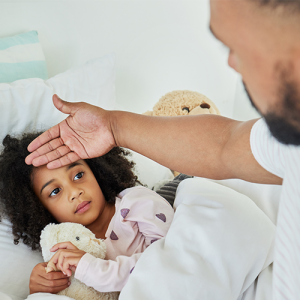
When is the flu virus most contagious?
Many parents wonder, is the flu contagious or, when is the flu virus contagious? Influenza, also known as the flu, is highly contagious, especially in children. An incubation period is the time before you feel any symptoms of an infection. Many people ask about the flu incubation period. The incubation period for influenza is usually one to two days. Kids can spread the virus from one day before symptoms start until their symptoms are gone — and their course of illness is often longer than that of adults.
The flu contagious period is highest during the first few days of symptoms, and this is when children are most likely to pass the flu to others, especially if they have a high fever, or they are coughing or sneezing. When children cough or sneeze, people around them may breathe in those infected droplets. Plus, those droplets can land on things like doorknobs or shopping carts, infecting people who touch them.
What time of year is the flu most contagious?
The flu virus thrives on cool, dry air, which helps it spread more easily. Because of that, flu season typically occurs in the fall and winter, with peak activity in the colder months. People tend to spend more time indoors in the colder months, making areas more crowded which increases the risk of spreading the illness.
Influenza A & B
There are different strains or types of influenza, with Influenza A and B being the most common in children. We often get asked things about the different types of influenza, like, “How long is influenza A contagious?” or, “How long is influenza B contagious?” The answer is: both can cause similar symptoms and are highly contagious, but some years one strain may be more common than the other.
If your child is feeling sick, contact your primary care provider for an appointment.
Flu symptoms and risk factors
Below we are sharing the common flu symptoms you may see in your children. Plus, it’s important to know which groups of people are at a higher risk for severe flu illness.
Common flu symptoms in kids:
- Fever (often sudden onset)
- Chills
- Headache
- Muscle aches
- Dizziness
- Loss of appetite
- Tiredness
- Cough
- Sore throat
- Runny nose
- Nausea or vomiting
- Weakness
- Ear pain
- Diarrhea
Groups at higher risk for severe illness:
- Young children (especially under 5)
- Kids with chronic health conditions (asthma, diabetes, heart problems)
- Children with weakened immune systems
- Kids who take aspirin regularly
Preventing flu spread
How do you get the flu? It’s important to know how to help prevent the spread of the flu if you or your children get it. This will help lower the chances of spreading it to other family members, other kids at school or other people in the community.
Parents can help stop the flu from spreading by:
- Washing hands well and often
- Covering coughs and sneezes
- Wearing a mask
- Getting the flu vaccine yearly
- Disinfecting surfaces regularly
- Keeping sick children home from school and activities
Get tips for treating the flu.
When can my child resume normal activities after the flu?
It’s normal to wonder about the flu timeline, like when can your kids go back to their normal activities like school, sports or other activities after having the flu.
How long after a fever are you contagious? Children should stay home until they feel better and have been fever-free for at least 24 hours without the use of fever-reducing medicine. Energy levels should be improving, and symptoms like cough and runny nose should be mild. When kids return to school or activities too soon, they can spread the virus to others.
The flu vaccine
The influenza vaccine is an important part of prevention for yourself and others. It is one of the best ways to protect kids and families from experiencing serious illness. It takes about two weeks for protection to develop after getting the influenza vaccine and protection can last up to a year.
We recommend people get vaccinated against the flu each year, ideally before the respiratory season begins, typically in the fall. But even if you get your vaccine later than that, it can still be helpful to possibly avoid experiencing serious symptoms from the flu.
Because influenza viruses are always changing, the vaccines are updated each year. Therefore, vaccination is recommended each year. We recommend contacting your primary care provider to learn more about this year’s flu vaccine and to schedule an appointment.
How the experts at Children’s Minnesota can help
At Children’s Minnesota, everything we do is centered around helping you raise happy and healthy kids. When it comes to the flu, our kid experts are here to help from diagnosis to recovery. Our team provides guidance on managing symptoms, preventing complications and keeping your family healthy.
Visit our primary care page to schedule appointments, get vaccine information and access resources for your child’s health.