
Complex hearing differences in pediatric patients that may lead to advanced hearing surgery such as bone conduction osseointegrated implantation or cochlear implantation sometimes begin as simple cases. “Sometimes you can’t predict which path a child’s hearing will take,” said Abby Meyer, MD, MPH, senior medical director of surgical specialties and pediatric otolaryngologist with Children’s Minnesota.
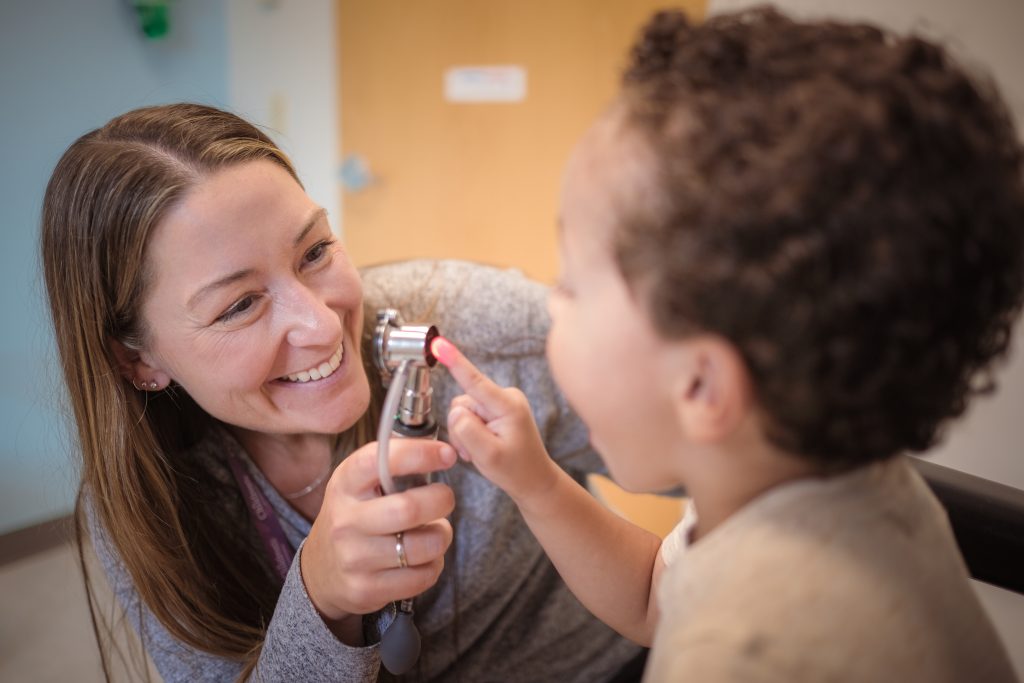
As the only pediatric ear, nose and throat (ENT) and facial plastic surgery program in the state dedicated exclusively to kids with disorders of the head and neck, Children’s Minnesota sees a high volume of cases involving hearing differences. “So, when a case does shift from simple to complicated, we have a great deal of experience collaborating with referring providers and their patient families to help them through what can be an overwhelming transition,” said Dr. Meyer.
When to refer a patient
Dr. Meyer identified several symptoms that could call for referral:
- Any parental concern about hearing or speech development
- Children with hearing differences who aren’t progressing with speech development as expected despite intervention
- Cases where an outside audiologist has intervened appropriately, but the child is still struggling.
“Kids sometimes compensate for hearing difficulties, which can make it hard to detect when they’re struggling,” said Dr. Meyer.
The ENT and facial plastic surgery program at Children’s Minnesota offers diagnostic and treatment capabilities for complex hearing cases, including low-radiation CT scanners designed for pediatric use, the ability to perform MRIs on infants without sedation, and access to genetics services. Children’s Minnesota has five complex ear surgeons on staff who perform cochlear implantation surgery as young as 6-7 months of age and bone conduction implantation surgery as young as 5 years of age.
Learn more about ENT and facial plastic surgery program. To refer a patient, please contact Children’s Minnesota Physician Access at 866-755-2121.