
Children’s Minnesota bleeding disorder program
Our pediatric bleeding disorders program specializes in diagnosing and treating bleeding disorders in infants, children, teens, and young adults (birth to age 21) within the Center for Bleeding and Clotting Disorders. We provide comprehensive, personalized care that matches the unique needs of each patient with a bleeding disorder – and we’re the only bleeding disorders program in the region focused exclusively on kids. Children’s Minnesota treats 80% of kids and teens in Minnesota with a hemophilia diagnosis, just one of many bleeding disorders.
Comprehensive, specialized care for bleeding disorders
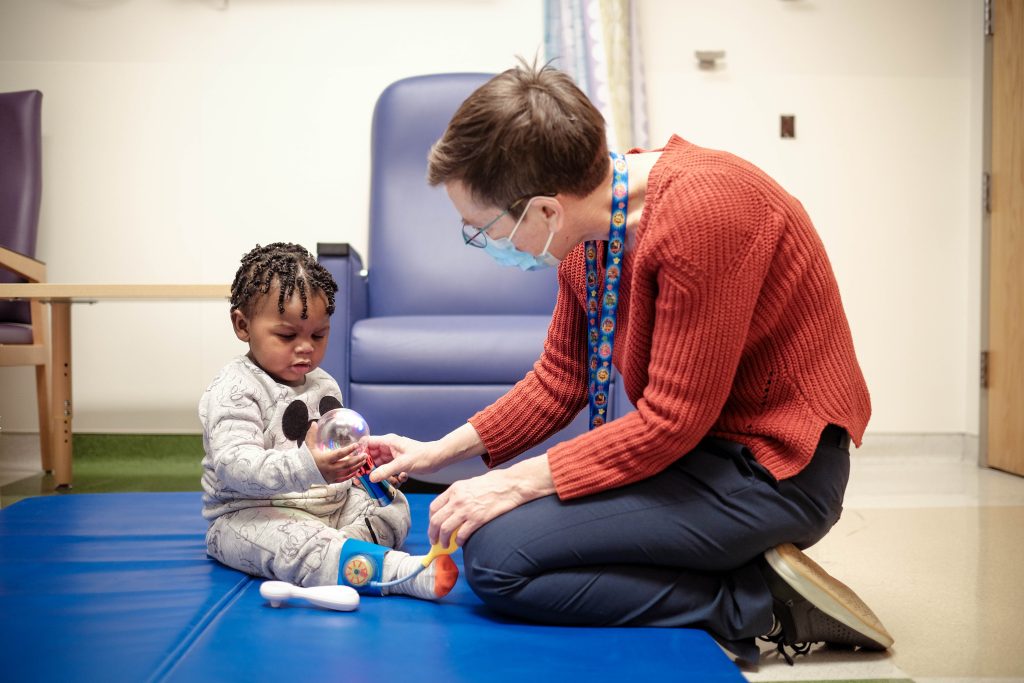
Our multidisciplinary care teams include pediatric specialists who address all aspects of your child’s needs—often seamlessly and within the same visit. This holistic approach means your child’s care team might include hematologists, nurse coordinators, physical therapists, pharmacists, social workers, genetic counselors, researchers, and more.
Understanding bleeding disorders in children
Bleeding disorders are a group of conditions where the body’s clotting process does not work properly, leading to excessive or prolonged bleeding. A child with a bleeding disorder has trouble making a secure clot due to challenges with one or more steps of the clotting process. This can lead to bleeding for longer than someone who does not have a bleeding disorder.
Bleeding disorders can be inherited, meaning they’re passed on through families’ genes and present at birth, or they can be acquired later in life due to other medical conditions or medications.
How clotting works (Hemostasis)
When a blood vessel is injured, the body initiates a process called hemostasis to stop the bleeding:
- Vasoconstriction – the blood vessel narrows to reduce blood flow.
- Platelet plug formation – platelets gather at the injury site to form a temporary plug.
- Fibrin clot formation – clotting factors activate in a specific sequence to produce fibrin, which weaves through the platelet plug to create a stable clot.
To better understand what it means to have a bleeding disorder, it can be helpful to understand both the functions of blood and the major steps to building hemostasis. Learn how hemostasis works.
We treat all types of pediatric bleeding disorders
We offer a complete range of care for the diagnosis and treatment of all pediatric bleeding disorders. Additionally, Children’s Minnesota belongs to a nationwide network of federally funded Hemophilia Treatment Centers (HTCs) and is the only such program in the region focused solely on pediatrics.
Here are some of the most common bleeding disorders we treat:
- Hemophilia and hemophilia carriers
- Von Willebrand disease
- Immune thrombocytopenic purpura (ITP)
- Platelet disorders
- Rare clotting factor deficiencies (factor 7, factor 13, and other factor deficiencies)
Read the full list of bleeding disorders we treat.
Symptoms of a bleeding disorder
The symptoms of a bleeding disorder vary greatly from person to person, and they can subtle or obvious. Some people with a bleeding disorder may not experience any symptoms until they are injured or have a medical procedure like a surgery.
Symptoms of a bleeding disorder include:
- Easy or excessive bruising
- Nosebleeds that are unexplained, frequent, or hard to control
- Bleeding from the gums/mouth without dental work
- Heavy and/or prolonged menstrual bleeding
- Bleeding into joints, muscles, and soft tissues
- Prolonged bleeding following injury or trauma
- Unexpected bleeding following surgeries or medical procedures
Bleeding disorders research
At the Children’s Minnesota Center for Bleeding and Clotting Disorders, we are strong advocates for innovation and research. We know that progress is key for improving treatments and enhancing the quality of life in patients. Our program participates in clinical research and health surveillance monitoring, contributing to groundbreaking advancements in bleeding disorder care.