

Understanding blood and hemostasis (blood clotting process)
Blood is a specialized fluid that has a significant impact on the body’s overall health. It carries oxygen and nutrients to the lungs and tissues, and it moves waste products to the kidneys and liver to filter and clean the blood. It carries cells and antibodies throughout the body to fight infection, and it can regulate body temperature. The body performs a special process (hemostasis) with blood to form clots that prevent excess blood loss.
The main components of blood
Four main components make up blood that runs through the body’s veins, arteries, and capillaries. They are:
- Plasma is the liquid portion of blood that carries blood cells throughout the body. Plasma also contains other substances including proteins and the different clotting factors that help the blood clot.
- Red blood cells contain an iron-rich protein called hemoglobin, which picks up oxygen in the lungs and carries it to tissues throughout the body.
- White blood cells fight infections in the body. There are many different types of white blood cells.
- Platelets are tiny little plate-like pieces of cells that gather together to help in blood clotting.
Hemostasis: How does blood clot?
The body’s normal response to a bleeding injury is a multi-step process called hemostasis. It starts just seconds after an injury. There are four stages of hemostasis:
1. First, vasoconstriction causes the walls of the damaged blood vessel to squeeze together to slow blood flow to the area.
2. During primary hemostasis, platelets circulating in the blood form a temporary plug:
a. Adhesion – Platelets floating in the blood begin adhering to the wall of the damaged blood vessel with the help of a sticky protein called von Willebrand factor (vWF).
b. Activation and secretion – Next, the platelets that are stuck to the wall activate by changing their shape – from a smooth disc to a ball with long arms – to reach other platelets in the blood. When the platelets are activated, they release a chemical messenger into the blood in a process called secretion. This message signals to other platelets to help form the clot.
c. Aggregation – Then platelets stick to each other and the vessel wall (called platelet aggregation) to plug the hole in the damaged blood vessel. However, this platelet plug is temporary and will only hold for a short period of time.
3. Next comes secondary hemostasis, where a fibrin net forms. A fibrin net is made up of 13 special proteins in the blood, called clotting factors, work together in a step-by-step process. These clotting factors help create tiny threads of fibrin that wrap around the platelet plug to form a strong, stable clot.
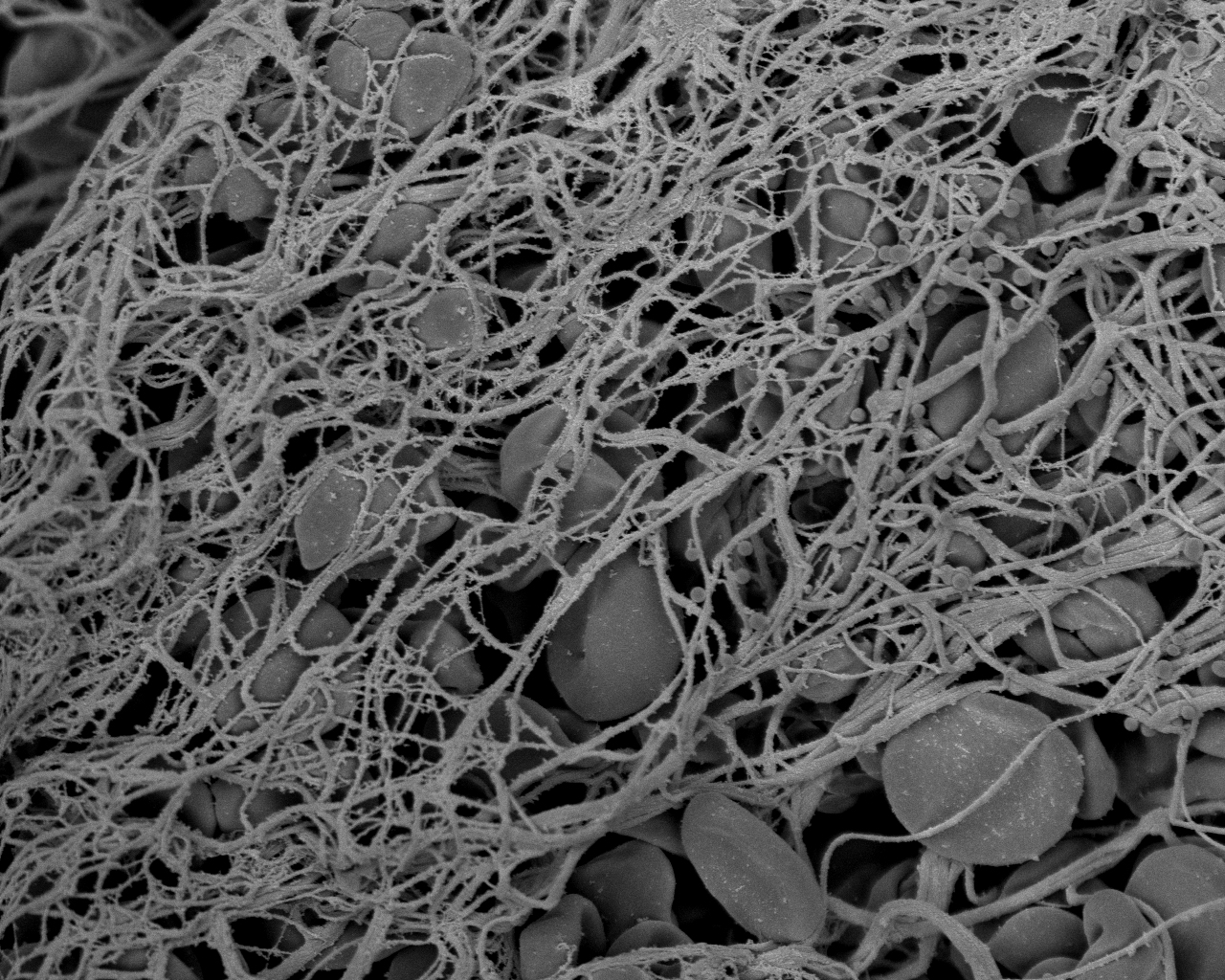
4. Fibrinolysis is the last step in hemostasis. This is the process in which a blood clot is dissolved after the bleeding is under control and the injury has healed. Dissolving the clot is important to ensure the blood clot does not continue to grow too large.
What causes hemostasis?
Any injury that causes tissue damage will trigger the body’s natural response to stop blood flow. This process, known as hemostasis, is the body’s healthy mechanism for forming a clot to prevent excessive blood loss.
However, hemostasis doesn’t always function as it should. In some cases, the body may produce too little or too much clotting, leading to clotting disorders that can pose serious health risks.