

On Saturday, Oct. 11, our country will recognize National Coming Out Day, an annual LGBTQ+ awareness day that honors the significance of “coming out” or inviting others into your truth and identity. This day is celebrated every October, during LGBTQ+ History Month, and seeks to encourage and support those who publicly claim the right to live authentically in their identity and to raise awareness about LGBTQ+ rights.
Coming out is a personal choice, one that often comes with various risks for LGBTQ+ folks. It’s also something that happens over and over again throughout an LGBTQ+ person’s life. For this year’s National Coming Out Day, I am sharing part of my own coming out story with you, in the hopes that it can shed some light on my experience, as well as a few lessons about how best to respond when others come out to you, whether you are a parent, grandparent, sibling, friend or colleague.
Though I am sharing with you the beginnings of my coming out journey, please recognize that over the last 30 years since I first came out, I have had to make the decision to share my sexual identity, relationships, gender identity and community many, many times, each time weighing the risks and benefits of sharing my authentic self with someone new.
I was 19 when I first came out. It was a huge step toward living authentically and wholly as myself, but this journey is lifelong when you live in a society that expects and rewards heterosexuality and being gender normative. As you join me for this trip down memory lane, think especially about the young people in your life who are navigating their identities during this particularly tumultuous political time, and ways you can love and encourage them to feel empowered to be themselves.
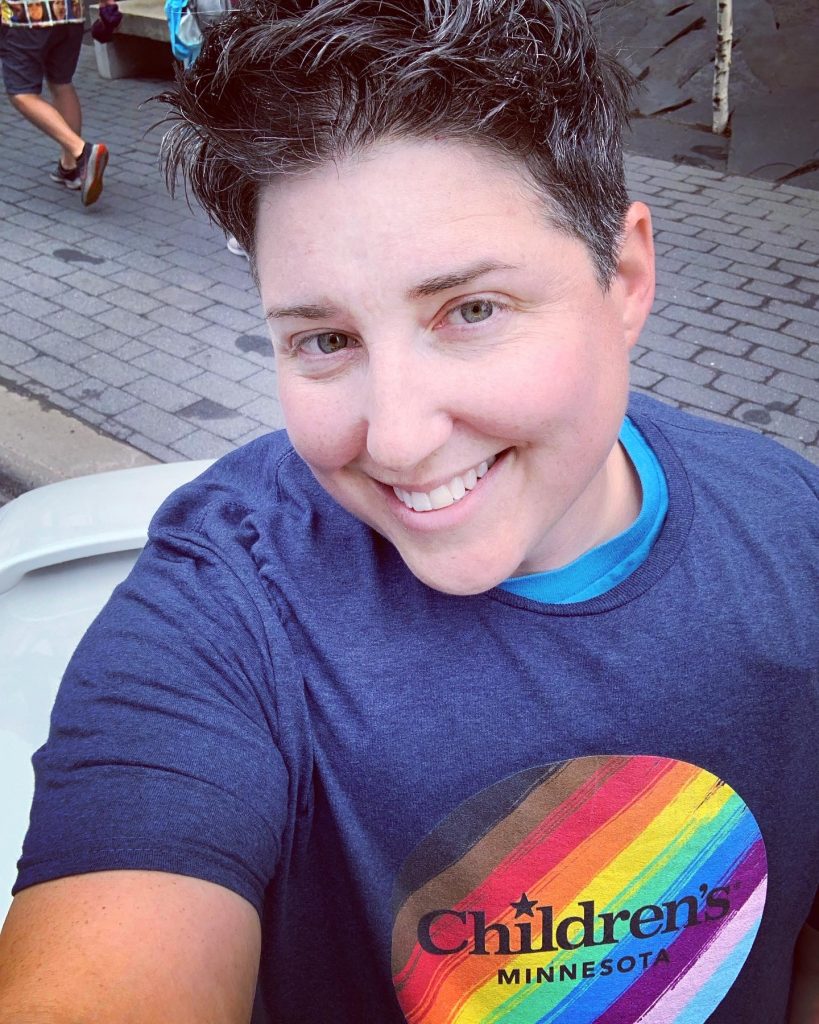
Part 1: big feelings
Though I had wondered in junior high and high school why I wasn’t interested in dating (with the expectation that I would be dating boys) and had heard the words “gay” and “lesbian” a handful of times, I really didn’t have much awareness of my own sexuality until I got to college. Sure, now looking back I can see the crush I had on a girl in English class or my 8th grade math student teacher. But at the time, I didn’t have words to describe or understand what I was feeling. When I went to college, I had no idea that my entire worldview, and the way I saw myself, was going to turn upside down when I fell head over heels in love with my best friend.
It crept up on me, this crush that turned into my first true love and long-term girlfriend, but once I admitted to myself what was happening, everything changed. I was raised Catholic. My mom and grandma were actively engaged in the church, and I had devoted my life to God as part of a non-denominational Christian youth group in high school. I very much considered my Christian faith a cornerstone of my identity and community. I was attending a small private Lutheran college in Iowa, and while I was also a member of our college basketball team, this was in the mid-90s, and the locker rooms at that time had deep closets. I eventually would come to know that some of the collegiate female athletes at my school were gay, but they were not “out” to their teammates or coaches during my entire collegiate career. Now that I knew I was gay, I had so many questions to answer, decisions to make. What was I going to do? Did I have to leave my religion? Could I hold my girlfriend’s hand on campus? Which friends could I tell at school and back home? Would I be kicked off the basketball team? What would my coach say? All these things — and more — kept me up at night, including wondering how and if I could tell my parents, my younger sister, my grandparents or other family members.
I struggled a lot that first year of college. I was trying to re-define my identity and walk the line between being authentically myself with others while actively hiding such a big part of who I was. I distanced myself from past support systems, including my family. I hid my first significant relationship, and all the ups and downs of falling in love, from everyone who mattered to me. The summer after my freshman year, I served as a camp counselor at a Young Life camp, run by the Christian youth group that had been such a big part of my community in high school. I spent the whole time wondering if these people who loved me so much would still embrace me if they knew I was gay.
At the end of the summer, I took a trip to Europe with my college basketball team. As we played teams across France, Austria, Germany and Switzerland, I had lots of time to think and process next steps. I spent a whole afternoon sitting on the side of a mountain in the Swiss Alps feeling so small in such an infinitely beautiful world, knowing I didn’t want to waste this one precious life not being myself. I spent a morning walking through the concentration camp at Dachau. I will never forget the large glass container filled with pink triangles, each representing the life of an LGBTQ+ person who had been there. I’ll never forget the feeling of knowing I was part of this history and community and the future they wish they had been granted.
I decided it was time for me to come out. I decided that the first person I was going to tell would be my dad. We had been close during my teenage years, having both sports and academics in common, and he had a best friend who was gay, my “Uncle” Paul. I knew that Paul had come out later in life after being married to a woman and having kids. Though my dad and I never really talked about Paul and his identity, my dad maintained this friendship and connection through that coming out process. That had to be a good sign, right? The thing I didn’t account for was that of all the people in the world I would never want to disappoint, my dad was probably at the top of that list. I felt this deeply as I anxiously sat in the basement, alone with my father, after asking if I could “talk to him about something.” What if he rejected me? What if he was disappointed? What if he didn’t love me anymore?
I started talking, and no sooner had the words, “Dad, I’m gay” exited my mouth that I was a crying, tearful mess. I said more, sobbing through my explanations and feelings. I can’t remember a single word I said. But I do remember looking up at my dad, after telling him my biggest secret and sobbing so hard my eyes were swollen and my nose was running, and he said, “I don’t understand why you’re crying.” He told me that he loved me, that it didn’t matter to him that I was gay, that I didn’t need to cry. He said everything would be OK. I felt a sense of deep relief. I also felt a sense of deep shame and guilt. He still loved me, but he didn’t or couldn’t empathize with how big a disclosure this was for me. I don’t remember getting a hug, but I probably could have used one.
Lessons for parents and others: When someone comes out to you, what you say matters. How you say it might matter even more. A good rule to remember is to match the emotion of the person disclosing their identity to you. If they make it a big deal, like my crying, slobbering display, then match that intensity with your reassurance and reaction. It helps to recognize the gravity of the moment and depth of emotion at play. On the other hand, if they share the news nonchalantly or without much fanfare, don’t react with heavy emotion, even if it’s positive. Offer casual but firm reassurance and follow their lead in terms of talking more. The important thing to remember is to match your emotional reaction and support to that of the person coming out to you.
Part 2: blue hair
After coming out to my dad, I made him promise not to tell my mom. It seems like an odd request, but trust me, I wasn’t ready. I knew I wanted to tell her, but she and I were not close. We had spent much of my teenage years fighting. She was also still quite Catholic. I didn’t know if she knew any gay or lesbian people, except my dad’s friend Paul and his partner. She had never indicated that she was supportive or accepting of LGBTQ+ people (pro tip: if you are, please make it known to your kids and young people in your life regularly). Part of me never wanted to tell my mom, but I knew I would have to at some point because I wanted to tell my younger sister. But I would have to tell my mom first.
I asked my mom to take a walk. After making some small talk, and after walking past the Catholic school near my house (impeccable timing is my specialty), I awkwardly inserted into the conversation “momthereissomethingiwanttotellyouanditsthatimgay.” Yes, all one word. She turned to me and didn’t say anything. “Mom, I just want you to know that I am gay. And I’m the same person, but I want you to know the truth.” Her face softened a bit, and she smiled and said, “Oh honey. I know. I thought that was the case. And I hope you know that I would love you no matter what…. even if you had blue hair.”
If you know me at all, you know I have never and would never have blue hair. So, odd flex on my mom’s part. But here is what I heard:
“I love you no matter what.” Good.
“Even if you did something strange or odd.” Is that how she sees being gay?
“And no matter what you choose to do.” Does she know being gay isn’t a choice like dying my hair?
At any rate, I felt a sense of relief. I understood what she was trying to say was that she both suspected I was gay (I mean, it didn’t take a detective, but also, she could have told me!) and that even suspecting I was gay didn’t change her unconditional love for me.
That would have been a good ending to the conversation. Unfortunately, just before we moved onto something more mundane, she threw in, “You’re not going to tell your sister, are you? I don’t think you should tell her. She’s too young.” Oof. I was hoping to tell my sister. My sister was 13 at the time and my mom thought she wouldn’t “understand” about me being gay and that my sister had “enough to deal with” as a teenager and didn’t want to “burden” her by allowing me to share with her my truth and authentic self. That was tough for me to swallow. I left that conversation with a sense of relief and reassurance of unconditional love, but also with a deep sense of guilt and shame. My mom loved me, but it was despite me being gay. And my identity was causing a burden for her and my sister.
Lessons for parents and others: When someone comes out to you, the first, and really only thing they need to hear is that you love them unconditionally. Not despite who they are, but explicitly because of who they are. You may have complicated feelings about your child/friend/colleague coming out to you because of your personal beliefs, or because you are worried about their safety or for other reasons. But that is not the time to share those feelings. They can be unpacked later, with a different support person that is not the LGBTQ+ person who just came out to you. When someone comes out to you, it’s time to focus on that person. They need to know you love them no matter what and that you are honored they shared their truth with you. Express love and reassurance. Ask questions later. And note, I’m not saying you can never ask questions. Just not in that moment. Stay present, stay loving, and give time and space before delving into what comes next.
Incidentally, I did come out to my sister about a year later. She was overjoyed. She told me she was so happy that I had told her and asked if she could come to Minneapolis to go to Pride with me the next summer.
Part 3: breadsticks
With my parents and my sister now “in the know,” the next hurdle for me was my maternal grandparents. My mom’s parents were not only incredibly faithful and somewhat rigid in their Catholic beliefs, they were also two people I admired very much. I was very close to both of them.
I was their only grandchild for six years before their other grandchildren were born, so I felt like they were always especially proud of me. I was terrified to tell them. I knew they loved me very much, but I also knew that if my identity or relationships were “against the church,” I might have little hope of a future relationship with them. Losing them would completely break my heart.
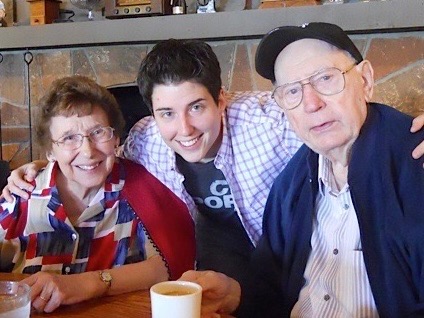
I waited to tell my grandparents until I had graduated from college and started medical school. I was in a new relationship with someone I thought might end up being my life partner. Keeping the secret was becoming more painful as time went on. I enlisted the help of my parents during one of their visits to the Twin Cities and I picked a public location (pro tip: to avoid potential emotional outbursts).
So, there I was, at the Olive Garden, with my mom, my dad, my grandma and grandpa, feeling like I was going to throw up. As the rounds of breadsticks came and went, I could feel the anticipation building. Finally, I cleared my throat. “Grandma and Grandpa, there is something I want to share with you. I have known for a few years now that I am gay, and it’s important to me that you know, because I want you to continue being a big part of my life.”
Silence.
No one said anything for what felt like forever. My mom looked at me, my dad looked at the breadsticks, my grandpa just kept eating his pasta. Finally, my grandma softly said, “Well, thank you for telling us.” And that’s it. I can’t remember what happened after that because I was sure I had just ruined my relationship with my grandparents forever. I was numb. At some point we paid the check, and we all walked out of the restaurant. I remember my grandpa walking up beside me and throwing his arm around me, squeezing my hip to his side in a firm and deliberate hug. Was this a form of reassurance? Or was this saying goodbye? He didn’t say anything, but I tried to take the hug as a good sign.
I went home and my partner asked how it went. I told her I didn’t know, but probably not good. I didn’t cry. I didn’t feel. I just waited. And then three days later, a large envelope showed up at my apartment, addressed to me in my grandmother’s distinctive cursive handwriting. I sat down on my couch and opened it. It was full of pamphlets and information about the “sin” of homosexuality. Catholic literature about how being gay was close to the worst thing on earth. No personal note or letter. I finally cried. I cried and called my mom. I had never felt that level of pain or rejection before. These two people who I loved and looked up to for more than 25 years thought I was going to hell simply because of who I was and who I loved.
To her credit, my mom sprang into allyship action. She immediately called my grandmother and gave her an angry earful. She told my grandma she was never to send me anything like that again. What was she thinking and how could she do that to me? According to my mom, my grandma responded, “Well, [she] told us [her] opinion and so we were just taking the opportunity to share ours.” I know my grandma enough to know that she actually meant that. She had no idea how getting that envelope in the mail would rip me into pieces. She didn’t understand how sharing her religious beliefs would feel like an attack on my humanity and a complete rejection of me as her grandchild.
The next several months were strained. I continued to see my grandparents at family events, and they acted as if nothing had happened. They were loving to me and treated me like they always had. They eventually met my partner. They came to my medical school graduation. It was as if both the conversation and the hateful pamphlets had never happened, except now they knew, and we had somehow just moved on.
Before I get to the final lesson, I want to fast forward a bit. It is 2011 and I have finished my residency and my previous relationship. I have bought my first house and started my job at Children’s Minnesota. I am engaged to be married, and my grandparents are invited to the wedding. I assume they will come, because I don’t know why they wouldn’t. They have met, and love, my fiancé. It seems as if my sexual identity has become something they accept or at least tolerate.
The special day comes and goes, and my grandparents are a part of it. My grandfather gives a toast and sings a few songs with the band at the reception. One of my favorite pictures of my grandparents was taken on that day. And then, the next morning, as my grandma and I were sitting on the porch of the bed and breakfast where we were staying, she told me she almost didn’t come to the wedding. I sat silently and let her continue.
“I know that the Catholic Church doesn’t support gay marriage and so I didn’t know if it would be right in the eyes of God for me and Grandpa to attend your wedding. So, I decided to talk to a priest. I drove to a parish about half an hour from [our small Minnesota hometown] and asked to talk to him about the situation.” She told me that he listened and then he said, “Mary, I can tell you love your [granddaughter] very much. I can also tell that you want to be there for [her] special day. And I can tell that your [granddaughter] taking this step to commit to marriage is important to you and aligned with your values. And I know that even though we try to divine God’s will, sometimes the church has gotten it wrong in the past. God speaks to us always, and a devout woman of faith like you can hear God speaking to you in your heart. Follow your heart and I trust that you are following God’s will.” My grandma said she prayed on it and she knew she and my grandpa should come to my wedding. And so, they did.
I didn’t know what to say. I wish I could have hugged that priest, whoever he was. And I learned then what I know now, which is this last lesson.
Lessons for parents and others: People change. Even when you don’t imagine they will, people change. They grow. They learn. You will also change. Even if you don’t think so, you will change. The most profound things that change us are lived experiences and relationships with others. You might think your grandparents will never love and accept you for who you are, but people change. You might think you can never support your child being transgender, but people change. Just be patient and let life and love and time make their changes.
It wasn’t just my grandparents who changed. My parents did, too. At one point my dad told me he would “never understand what it means to be gay,” even though he loved me unconditionally. Then I found out he openly challenged the homophobic beliefs of one of his dental students in class. He shared with me the simple and eloquent way he stood up for LGBTQ+ civil rights. And even though my mom worried that my 13-year-old sister wouldn’t be able to “handle” my coming out, she changed too. She took a job as a school nurse at my high school shortly after my sister graduated and became a sanctuary and safe place for LGBTQ+ kids there. She also became the faculty advisor for the school’s Gay Straight Alliance.
I have three kids now, and they love their grandparents and great-grandmother. My Grandma Mary is 95 and as devout in her Catholic beliefs as ever. She loves me deeply and she loves her great-grandchildren who bring her so much joy. When I got divorced a few years ago (the only thing in her mind that may be worse than being gay), she told me, “At this point in my life, I’ve learned that the most important thing is to be happy. You have to live the life that makes you happy. And if you’re happy, then I’m happy with you and for you.”
On this National Coming Out Day and for all those to come, I encourage all of you who are a part of our beautiful LGBTQ+ community to live the life that makes you happy. Being authentically ourselves is a brave choice. And it is always worth it. But if now is not the time because of safety and security concerns, you are still a part of our LGBTQ+ family, and we will always be here for you. For those of you who love someone who is a part of our beautiful LGBTQ+ community (and that’s everyone else, because you all do whether you know it or not), please remember that words of unconditional love and support go a long way. They could even save someone’s life. And actions that support the equal rights and humanity of LGBTQ+ folks go even further.
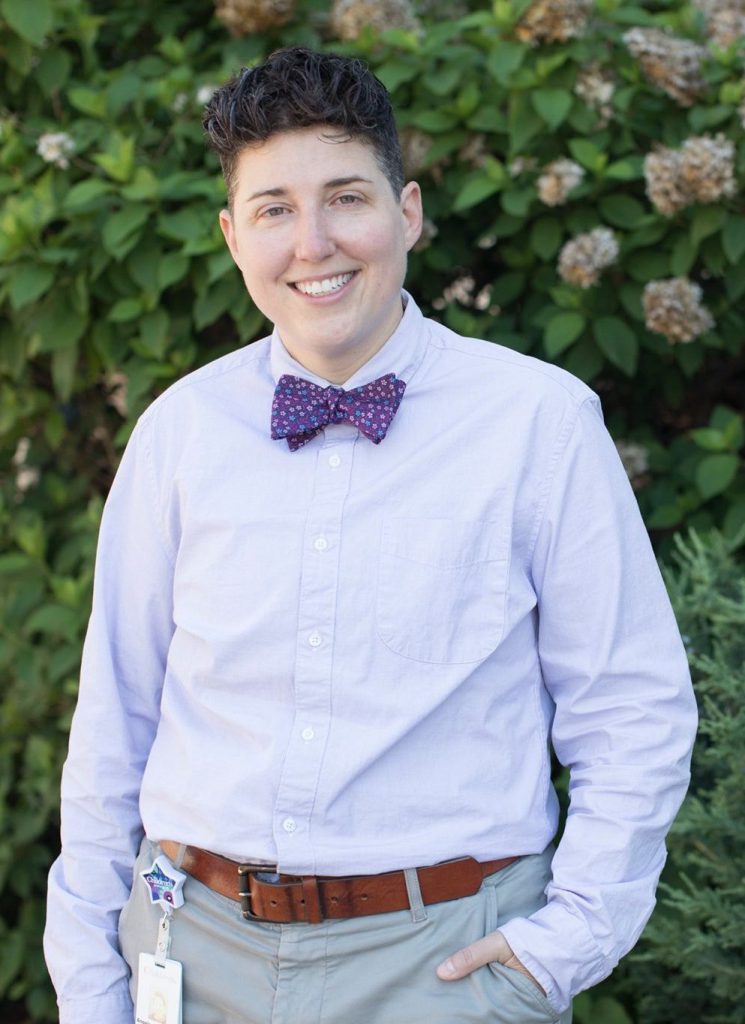
Dr. Kade Goepferd
Chief education officer and pediatrician in the Gender Health program
Dr. Kade Goepferd (they/them) founded the Gender Health program at Children’s Minnesota and continues to advocate for advancing equitable health care for all children. They have received several local and national awards for their work in advocacy and education and gave their first TED talk, “The Revolutionary Truth about Kids and Gender Identity” at TEDx Minneapolis in 2020.