
This blog has been medically reviewed by Dr. Gigi Chawla, chief of general pediatrics at Children’s Minnesota.
As a new parent, you’ll have so many questions about so many things. Sleep is a big one. You can count on the pediatric experts at Children’s Minnesota to help you navigate sleep — and safety, feeding, growth, and every element of childhood.
We’re here to help you raise healthy, happy kids, from these earliest days through the teen years and beyond.
Resources for expectant parents
The kid experts at Children’s Minnesota are here to help support new parents.The basics of safe sleep
Sleep is such an important part of our lives – including your newborn’s life! The kid experts at Children’s Minnesota are sharing advice on the basics of sleep for your newborn — how much sleep newborns should get, swaddling your baby, co-sleeping and more.
We want parents to be confident in keeping their baby safe, especially during sleep. Knowing the safety basics of sleep can help prevent sudden infant death syndrome (SIDS), which happens when an infant dies of unknown causes, typically during sleep.
We know that all babies are different, and parents know their babies best. Because of that, we recommend always asking your pediatrician when you have questions.
How much sleep should a newborn get?
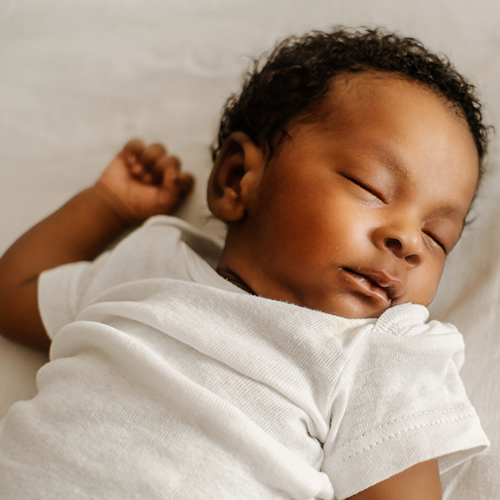
Many new parents wonder about how much sleep their newborn should get. As babies age, typically, so do their needs for sleep. It’s important to remember that every baby is different.
Generally:
- Newborns typically sleep 14-17 hours; many sleep more, but a few may sleep less.
- Babies who are 4-11 months old may sleep 12-15 hours.
- Newborns feed every few hours, including throughout the night.
- Breastfed babies typically feed about every 2-3 hours.
- Formula-fed babies tend to feed less often, typically about every 3-4 hours.
Find a pediatrician
Our team of expert pediatricians is dedicated to partnering with you to care for the health and well-being of your child for many years.Co-sleeping
We understand as a new parent wanting your newborn baby to be close. Many parents ask our pediatricians about co-sleeping. Is it safe?
Our kid experts — and the American Academy of Pediatrics (AAP) — do not recommend co-sleeping with your newborn baby. This is because it can be unsafe to do so, and it could result in an infant suffocating or possibly dying.
Instead of co-sleeping in the same bed, we recommend having a bassinet or crib in your room next to your bed. That way you can safely have your baby nearby.
Environment for safe sleep
Safety is so important with newborns and kids. We’re here to partner on the best fit for your family. To help keep your baby safe, here’s the environment we recommend newborn babies for sleep:
- Newborn babies should be placed on their back to sleep. They should not be placed on their stomach or their sides.
- Use a firm, flat sleep surface. Cover the mattress with a sheet that fits snugly.
- Do not put anything else in the crib or bassinet. Keep all stuffed animals, pillows, blankets, crib bumpers, etc., out of the sleep area.
- To avoid overheating, dress your baby for the room temperature and don’t over bundle.
- Watch out for other hazards, such as items with cords like window dressings, ties or ribbons that can wrap around a baby’s neck, and objects with any kind of sharp edge or corner.
- Make sure that all sleep surfaces and products you use to help your baby sleep have been approved by the U.S. Consumer Product Safety Commission (CPSC) and meet federal safety standards.
Swaddling
Getting your baby to sleep can sometimes be hard. Did you know? Swaddling (a way to wrap your baby in a thin blanket) helps some infants relax and sleep. It may also limit the startle reflex (when babies are surprised and throw out their arms and legs), which can wake them. Try swaddling your baby for naps and nighttime sleep to see if it comforts them. You can also try it if your infant is fussy or crying.
It’s important to remember, once your baby shows signs of starting to roll over, like turning onto their side, you should stop swaddling them as the tight blankets may prevent them from being able to roll back safely. Typically, babies show signs of starting to roll to their side around 2 months.
Sleep training
As a new parent, you’ll quickly learn that newborns follow their own schedule. Over the next couple of weeks to months, you and your baby will begin to settle into a routine. Many new parents wonder when you can start sleep training, the basics of sleep training and more.
Experts typically recommend starting newborn sleep training between 4-6 months of age. By 4 months old, most babies can sleep for six hours between feeds overnight. By 6 months, most children can sleep through the night.
Sleep training can be challenging to adjust to for parents and for the baby. As always, if you have any questions, we recommend asking your pediatrician.
Primary care at Children’s Minnesota
We have nine pediatric primary care clinics and one adolescent clinic that are conveniently located throughout the Twin Cities metro area so your family can access the best care, close to home.