
Translations: Español | Soomali
At any age, children will likely be exposed to information about immigration enforcement, whether from peers, the news, in person or on social media. Our social work team at Children’s Minnesota put together tips for talking to kids about U.S. Immigration and Customs Enforcement (I.C.E.) actions.
The first step is always to check in and find out what the child already knows. Remember, you don’t have to have all of the answers to be a support to children with worries. What truly matters is being there, listening with kindness and offering steady support.
Tips for talking to kids about I.C.E.
Assess what they already know
Ask about what they know of I.C.E. or what they may have heard or seen; be curious. You could say something like, “Hey, there’s so much going on in our world right now. I’m wondering what you have heard?”
Tailor the conversation to the child’s current understanding
Help them navigate strong emotions and create space to correct any misinformation they may have heard.
Allow kids to lead the conversation
Be open to questions.
Keep it simple and concrete
Ask open questions like “What do you need from me?” or “How can I support you?”
Be honest
Tell the truth in a way your child can understand. Honesty builds trust.
Focus on feelings
Encourage emotional expression and normalize feelings. Let kids know it’s OK to feel sad or anxious or to cry. They also may feel many emotions at the same time – it’s OK to have fun when other people feel sad. It’s possible to be brave and also cry.
Model calmness
Practice deep breathing or counting together. Show calm body language so kids mirror your regulation.
Offer consistent reassurance
Kids want to feel safe and that you, as an adult, are going to do everything you can to keep them safe.
Know how to spot stress reactions in kids
If these signs are short term, reassure your child with calmness and routines, and emotional support. If symptoms continue for more than a couple of weeks or get worse, reach out for help – talk to a teacher, trusted neighbor, pediatrician or a mental health professional.
- Very young children may sense stress and tension in their environment; this can show up in the form of developmental regressions like bed wetting.
- Younger school aged children may understand some of what is happening but still may be confused around the complexities of current events. They may have difficulty concentrating at school or exhibit fears around going to school/leaving the house.
- Other warning signs of stress responses might include physical responses like headaches or stomachaches or behavioral responses like changes in eating or sleeping patterns.
What not to say
Try not to say things like “don’t worry about it” or “this won’t happen to us.” This can be dismissive and not create space to talk about worry. It also can create a false sense of security and conflict with what children see in the media.
Suggestions to support
Validate feelings
No matter their age, validate the feelings (confusion, fear, frustration, anger, worry) your child is expressing. Holding space to process and listen is enough if you aren’t sure what else to say.
Balance media exposure
Limit and balance media exposure/media coverage (in the car, on the tv, etc.); model good media “hygiene” for your children and avoid nonstop exposure to news. Take breaks and reconnect when needed.
Tips to help kids feel safe
Your calm will help your kids feel safe.
- Create spaces for them to express feelings through talking, journaling or drawing.
- Use calming tools like breathing and fidgets.
- Keep routines in place.
- Limit content of adult conversations in front of kids as possible.
- Always reassure kids that they can come to you with worries or questions.
Channeling energy
Help your child channel energy toward areas of their life that are within their control to empower them to form an adaptive mindset through challenging times.
Be there for them and for you
Let children know that they can come to you anytime. They may want to talk at unexpected times or in short bursts rather than planned or focused conversations (depending on their age).
Remember to take care of yourself too. As adults, we have to check our own mental health. Don’t burn out and don’t let your anxiety spill onto your children.
Tips for talking to your kids about protests and ICE activity in the Twin Cities
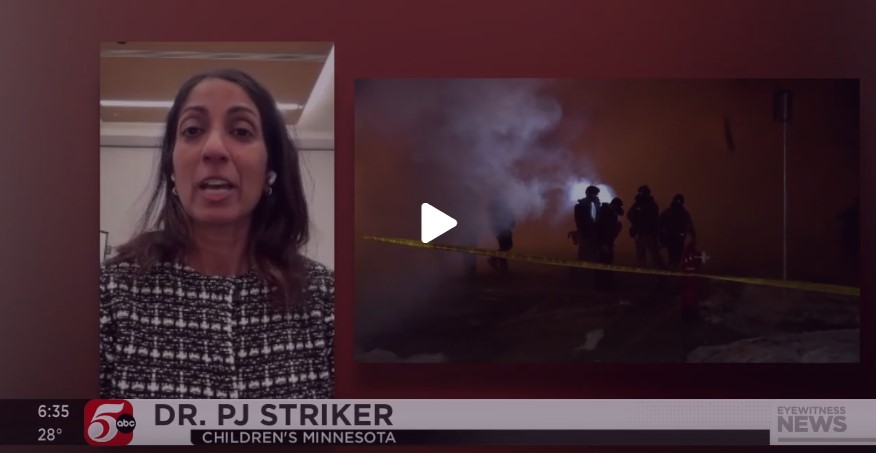
Dr. PJ Striker, psychiatrist at Children’s Minnesota, joined KSTP to share tips for parents.