

Diversity, equity and inclusion work wasn’t a thing until relatively recently. So, it’s not surprising that at Children’s Minnesota, we don’t have a detailed historical record of things like who was the first African American doctor? Who was our first Native nurse? How many Latino, Asian, African and Native American children and families did we serve early on? We may never know.
What we do have are old photos from our archives. And some of them tell an interesting, though incomplete, story about our early years. There are three people in these early photos that I want to call out. You probably won’t recognize their names. And I don’t know a whole lot about them, but from what I can tell, they were Children’s Minnesota trailblazers.
Dr. Lillian Nye
Take a look at this picture from the 1930s. This is an early photo of the medical staff of Children’s Minnesota (called Children’s Hospital of St. Paul at the time). With a quick glance, it may look like a group of men. But, when you look a little closer, you’ll see one woman, sitting in the second to last row, third from left. That’s Dr. Lillian Nye.
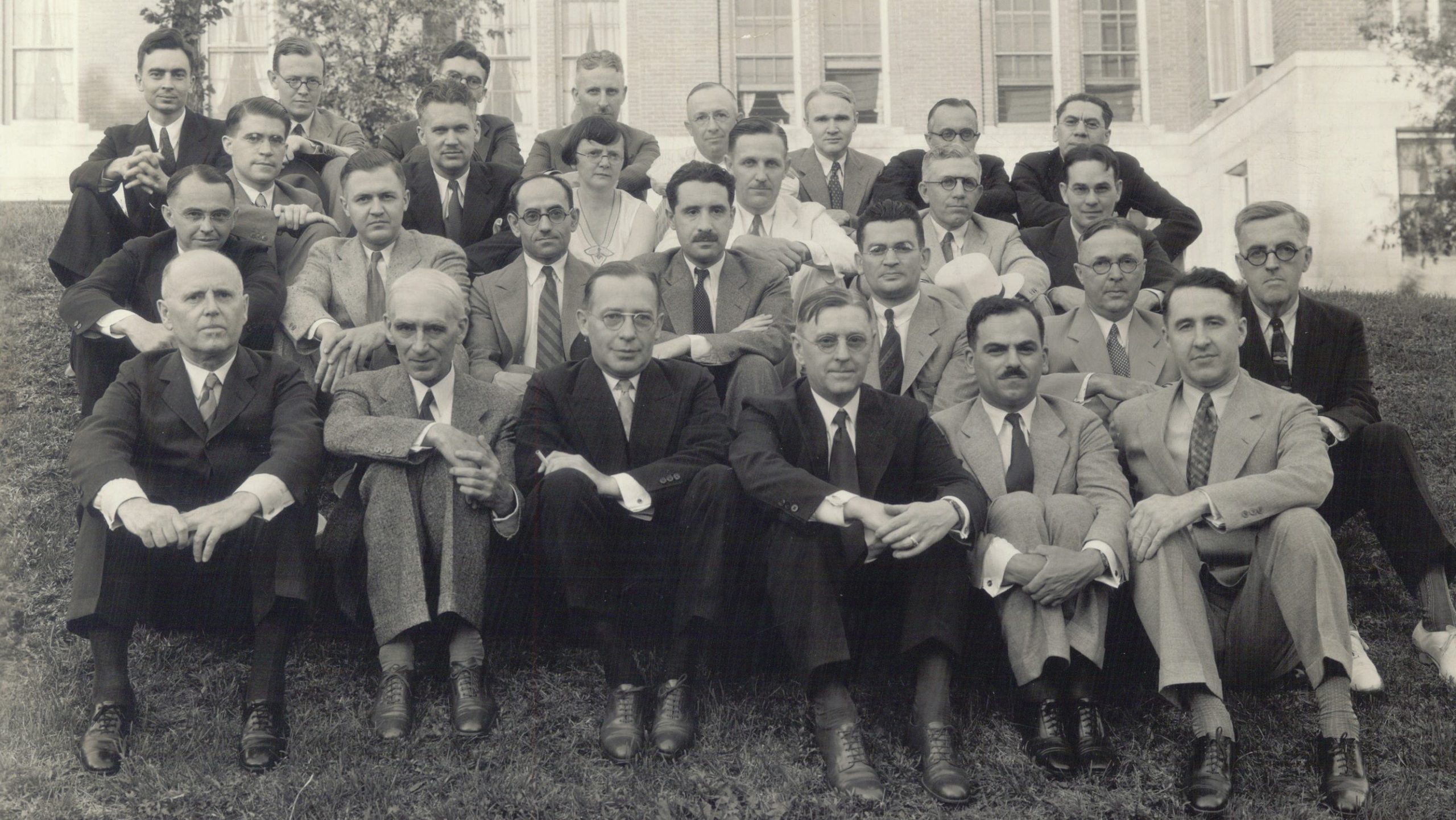
As far as we know, Dr. Nye was the first female doctor at Children’s Minnesota, and perhaps the first female doctor in St. Paul. We know that she grew up in Zumbrota, Minnesota, and in 1916, four years before women could vote, she was one of the first three women to enroll in Yale Medical School. We know that she and her sister Dr. Katherine Nye practiced medicine in St. Paul for almost 50 years.
We also know that women of Dr. Nye’s generation faced discrimination in most areas of their lives. Social norms dictated that they get married and stay home to raise their children. They had limited employment options outside of nursing and teaching. The few women doctors that existed faced rampant sexism in a field dominated by men.
What we don’t know is what was it like for Dr. Nye to be the only female doctor at Children’s Hospital of St. Paul. What challenges did she face? What was her impact?
Lois Young, RN
If opportunities for white women in medicine, and the world at large, have historically been limited, there were even fewer opportunities for Black women. The earliest photos in our archives don’t show any African American men or women on our staff. Fast forward several decades and there’s this photo from the 1960s. It was taken inside our St. Paul hospital. In the foreground is Lois Young, RN.
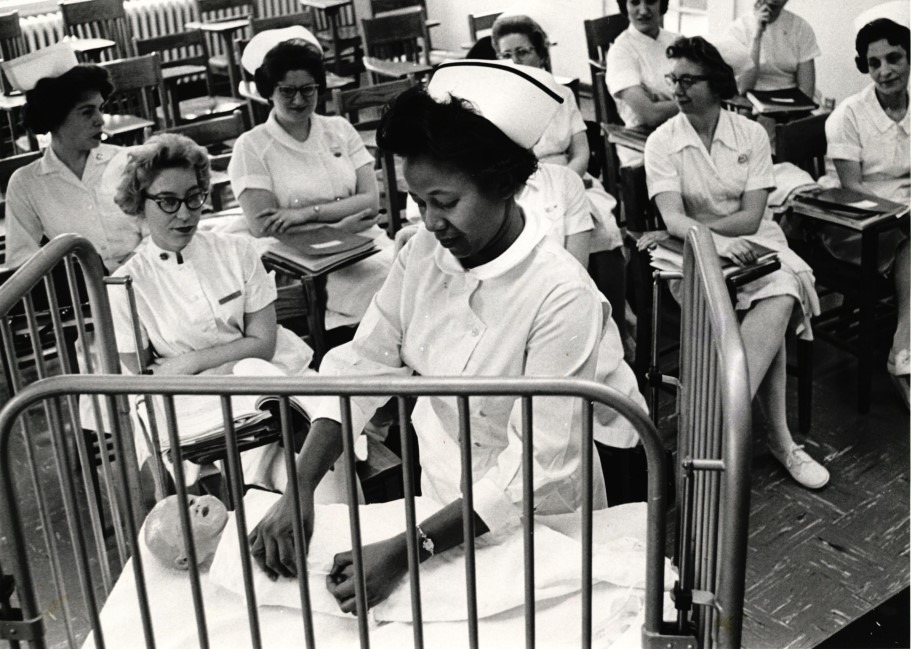
Young began as a staff nurse, then was promoted to director of in-service education. In the photo, she appears to be leading a training for nurses. The continuing education program Young developed for our hospital staff earned “a national reputation for excellence” according to an article in the St. Paul Recorder newspaper. We know that Young earned her nursing degree from Tuskegee Institute in Alabama, a Historically Black College and University, and that she worked at our St. Paul hospital for 25 years (1953-1978).
We also know that during Young’s lifetime, Black people in Minnesota faced racism and discrimination across the board: in housing, education, health care and employment. During Young’s time at Children’s Hospital of St. Paul and just a few blocks away, a historically Black, thriving neighborhood called Rondo was destroyed to make way for I-94.
What we don’t know is what it was like for Young to hold a leadership position at our St. Paul hospital, a mostly white institution, in the 1960s. What were her challenges and experiences over 25 years of service? What was her impact?
Dr. Robert Rosenthal
Now back to the photo of our medical staff in the 1930s. Second row, center, the man with a moustache, is Dr. Robert Rosenthal.
Dr. Rosenthal helped found our Children’s Hospital of St. Paul in the 1920s and practiced pediatrics in St. Paul for more than 50 years. We know that he graduated from the University of Vienna and that he was Jewish.
We also know that during Dr. Rosenthal’s lifetime, Jewish people in Minnesota faced discrimination in housing and employment – including in medicine. A 1947 study found that 63% of companies in Minneapolis didn’t hire Black or Jewish people. We know that it wasn’t until the 1950s that the Twin Cities had a private hospital, Mount Sinai, that allowed “minority doctors” on its staff. We know that not until the 1990s, were all Twin Cities hospitals “open to doctors of all races and religions.”
What we don’t know is what it was like for Dr. Rosenthal to be one of the few (maybe the only) Jewish doctors on staff at our Children’s Hospital of St. Paul in the early years. What were his challenges and experiences over his many years of service? Did he bring a unique perspective to his colleagues and patients?
Unanswered questions
Because we know so little about the experiences Dr. Nye, Young and Dr. Rosenthal had at Children’s Minnesota, we’re not able to draw many conclusions. We could say that despite the racism, sexism and discrimination of the times, each was still able to have a long career in health care. We can also say that much has changed at Children’s Minnesota.
Today nearly half of our patients and families are people of color. Because they deserve to feel valued, respected and supported, we’re working to create a diverse, equitable and inclusive culture that reflects the rich backgrounds of the communities we serve.
A few examples from 2019 to 2024:
- We increased the diversity of our workforce from 19% to 26%.
- We increased the racial diversity of our executive leadership team from 0% to 40%.
- Half of our executive leadership team is women.
- We’re increasing our supplier diversity.
- We offer our patients culturally sensitive and inclusive clothing when they’re at our hospitals and clinics.
And we still have much more to do to undo the structural sexism and racism embedded in health care from the very beginning. Dr. Nye, Young and Dr. Rosenthal might have a thing or two to say about that. I wish I could ask them.
James Burroughs
Senior vice president, government and community relations, chief equity and inclusion officer
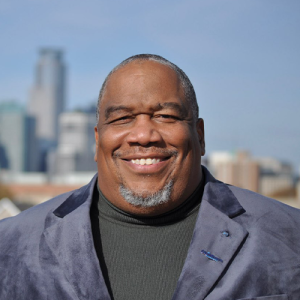
James Burroughs is the senior vice president, government and community relations, chief equity and inclusion officer at Children’s Minnesota. He is responsible for advancing equity and inclusion in all parts of the organization.
Follow James on LinkedIn.