
Night Shift Council added to professional governance structure
The professional governance model at Children’s Minnesota consists of nursing councils at the system, community and unit levels. 12 system-level councils work in collaboration with community and unit-specific councils to address various functions affecting nursing, including operations, professional development, clinical practice, innovation and research.
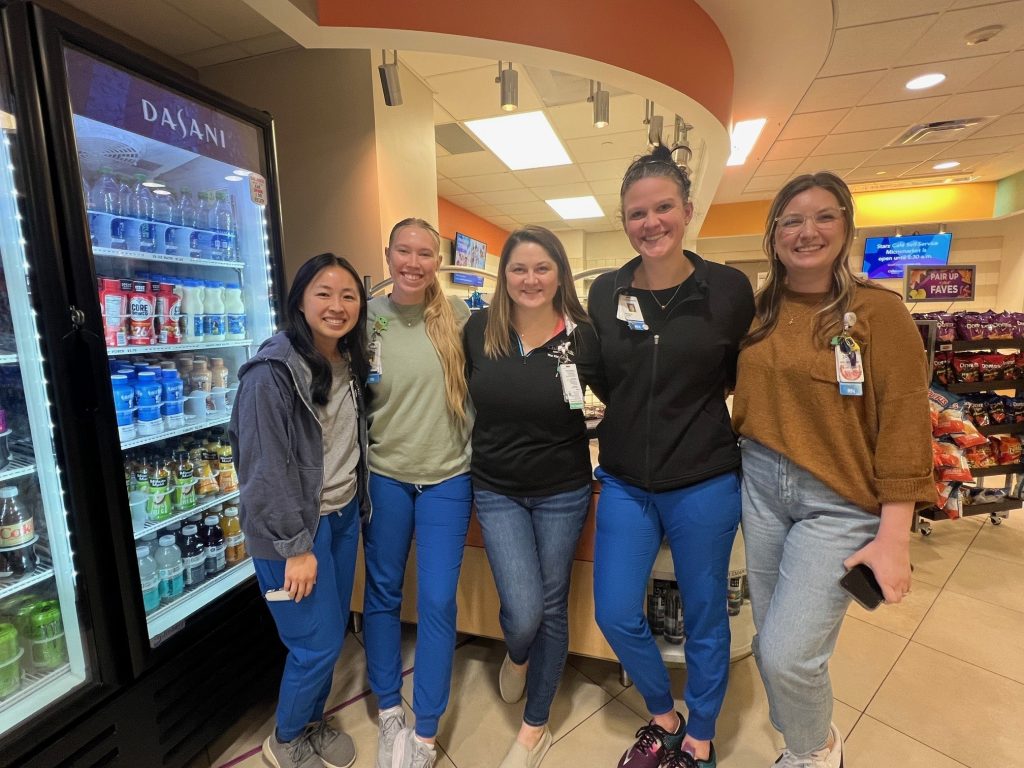
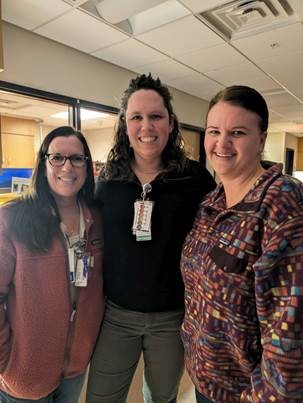
In February 2024, the Night Shift Council launched and was added to this structure. Led by co-chairs, Kristin Berghoff, BSN, RN, clinical nurse, St. Paul float team; and Taylor Zerr, MSN, RN, clinical nurse, Minneapolis PICU, the council consists of 12 clinical nurses representing all care communities.
The goals of the council are to promote increased visibility for night shift nurses and to provide a venue for them to identify gaps, concerns and areas of opportunity that are specific to their shift.
The council’s responsibilities include but are not limited to:
- Communicating and implementing projects and initiatives from professional governance to night shift staff.
- Identifying, collaborating and escalating continuous improvement principles for problems identified by night shift.
- Making decisions for night shift specific content, process and workflow.
- Implementing projects that elevate and standardize care, including education, practice, quality and performance improvement, empirical outcomes, new knowledge and innovation, and healthy work environment.
- In just the first year, the council has provided invaluable insight and guidance to the nurses they represent and their leaders.
Rapid improvement event leads to streamlined nurse orientation process
In January 2024, a multi-disciplinary team took on the lofty goal of standardizing and streamlining hospital-based RN hiring and orientation. They joined together in a three-day rapid improvement event to brainstorm, problem solve and create innovative, new processes.
The problem
Our preceptors (trainers), orientees (new nurses), clinical educators, human resources team, schedulers, leaders and other stakeholders voiced concerns about the orientation variation amongst care communities and limited real-time visibility to where the new nurse was in the orientation process. With hundreds of nurses being hired each year, these discrepancies and miscommunications compounded and even increased the likelihood of unwanted variation in patient care.
The goal was to standardize and improve our hospital-based nurse hiring and orientation process. The team also expressed wanting new nurses to be ready to work independently as efficiently and safely as possible.
The solution
The orientation process was streamlined from the time a nurse accepts their job offer to when they start practicing independently. New hire communications, preceptor tools and timing of milestone meetings were revised and standardized to optimize the onboarding experience.
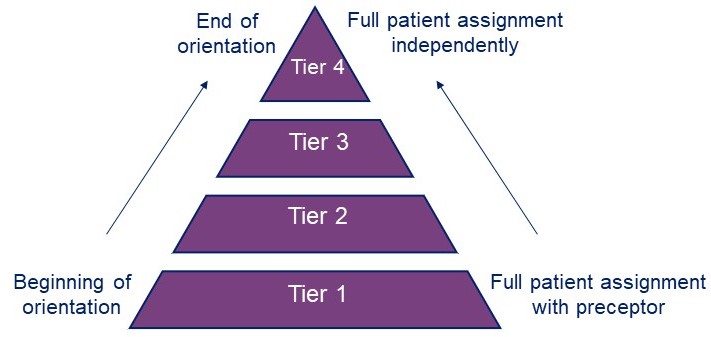
A new framework also emerged from the three-day rapid improvement event; hospital-based nurses now use an evidence-based tiered approach to acquire skills, from basic to complex, in each unit. The Children’s Tiered Orientation Framework model called STAR allows new nurses to demonstrate competency in the skills in one tier before moving to the next tier.
Beginning March 11, 2024, all newly hired hospital-based RNs followed the streamlined hiring and orientation process. As of February 2025, preceptors onboarded 316 new nurses with this new process.
Metrics for success
The goals of the new process were to reduce controllable turnover, defined as nurses leaving the organization in the first year, and reduce the turnover disparity with nurses of color. Both of these goals were met. Controllable turnover went down 0.6% and the turnover disparity decreased from 10.2% to 8.5%.
Peer Support Salons honored by Schwartz Center
The Peer Support Salons at Children’s Minnesota were selected as a 2024 Corman IMPACT Honorable Mention. The recognition celebrates Schwartz Center health care members who are making an impact by creating programs or initiatives that promote compassionate, collaborative care.
The health care environment exposes health care workers to unexpected and near miss events, including patient harm and medical errors. Peer Support Salon Workshops are a proactive approach to enhancing the culture of safety at Children’s Minnesota.
Salons are structured gatherings where each participant forms and informs the conversation. Unlike formal meetings, they are opportunities where all team members can connect and share experiences. Learners experience how Peer Support Salons enhance completion of the stress response cycle and gain facilitation skills to offer the salon experience to colleagues.
Professional Development Menu curates learning opportunities for nurses
Nursing practice evolves quickly. As an ever-changing field, it’s essential we conduct research to improve patient care, outcomes and satisfaction. To facilitate ongoing learning and scholarly work, and to help Children’s Minnesota nurses be the best they can be, the Professional Development Council developed a menu of options.
The Professional Development Menu gives nurses ideas and resources to help them develop their career. It is conveniently broken down by years of experience. It can be a great tool for clinical educators to use to help new nurses set SMART goals during orientation, for leaders during annual reviews to guide continued development and for individuals looking for additional learning opportunities.
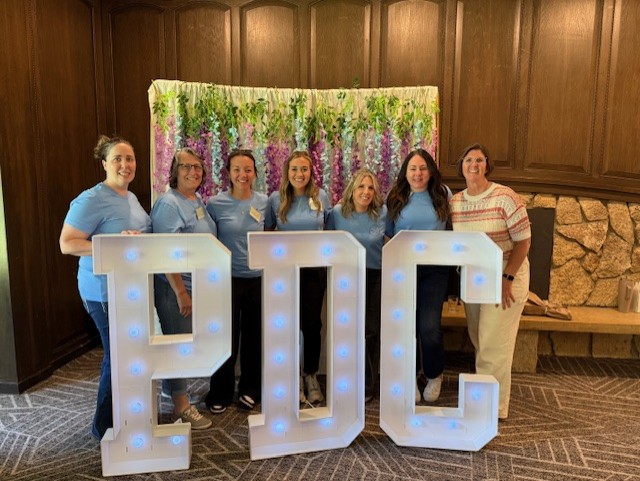
Opportunities range from something simpler like joining Journal Club or becoming a champion or superuser for an organizational initiative, to something more time and resource-intensive like applying to graduate school or seeking a leadership role.
By creating and promoting the Professional Development Menu, the council continues to deliver on their goal of advancing nursing professional practice at Children’s Minnesota.
Well-Being Padlet helps address stress, burnout
Nursing is a cherished but challenging profession. Self-care is essential to prevent burnout, manage stress, enhance resilience and maintain well-being.
In partnership with other wellness-focused programs and teams, the Healthy Work Environment Council curated all well-being resources offered to Children’s Minnesota staff members and located them on a convenient virtual bulletin board that can be accessed anywhere at any time. It’s called a “Padlet” and doesn’t require logging in to the Children’s Minnesota network. From counseling services to wellness challenges and events, there are a variety of options to help nurses achieve their personal and professional wellness goals.
These resources and the teams behind them are essential to supporting Children’s Minnesota Kid Experts who share their talents and live our values to create remarkable experiences for the children who rely on us.